






Managing a workforce becomes considerably more challenging as a business grows. Employee records accumulate, recruitment takes longer, payroll responsibilities increase, and managers struggle to give everyone the attention they deserve. These difficulties explain why businesses are increasingly interested in intelligent workforce management and technology that reduces administrative pressure.
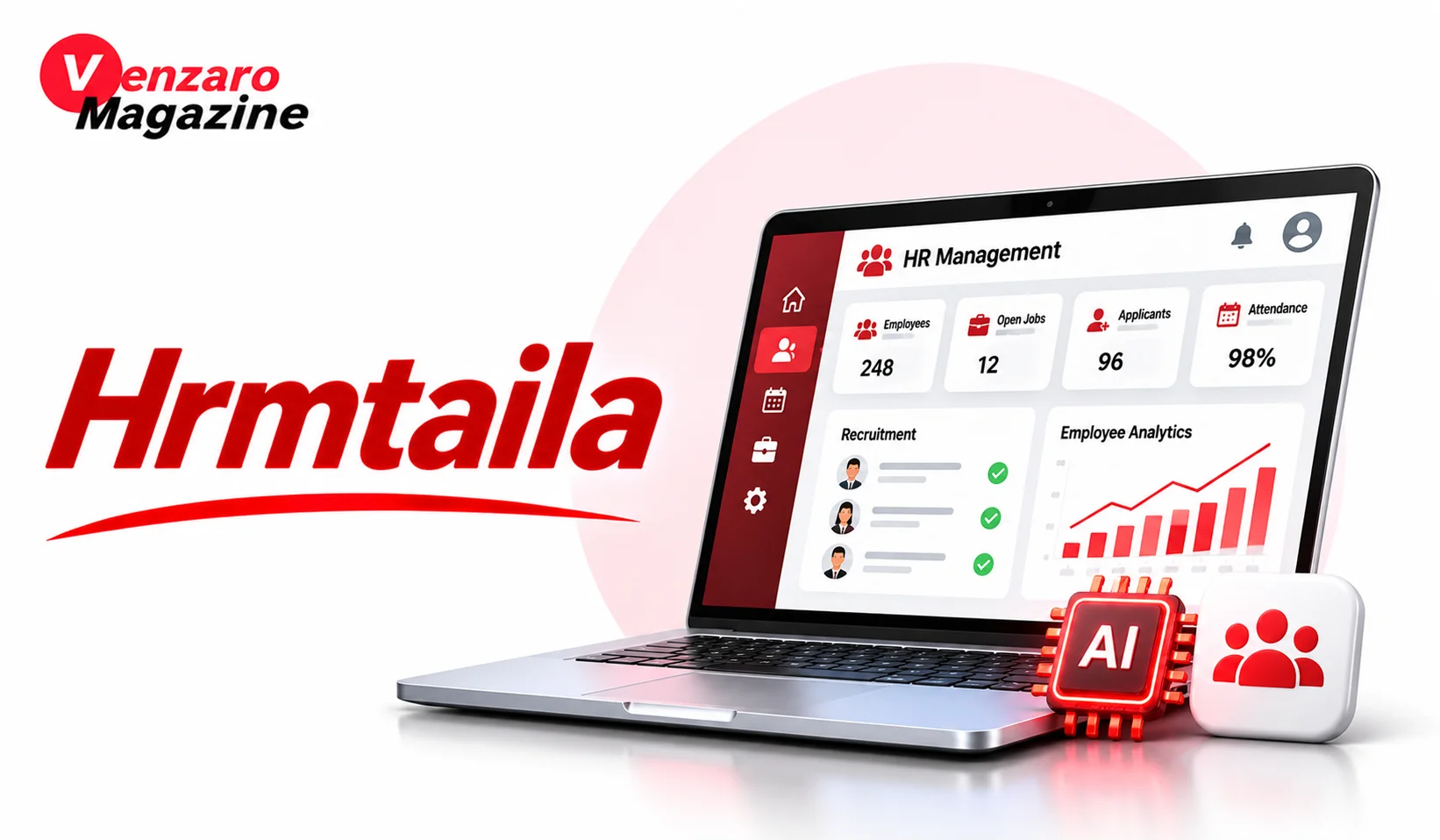
Hrmtaila is an emerging online expression associated with human resource management, artificial intelligence, and personalized workplace solutions. Although its complete meaning has not been officially established, the term is commonly discussed in connection with modern HR practices. It should not, however, be confused with a verified commercial software platform.
The discussion surrounding this keyword raises a worthwhile question for business owners and HR professionals: how can organizations improve workforce management without making employment feel increasingly mechanical?
The Meaning Behind an Unconventional Business Term
The first three letters of Hrmtaila represent a familiar abbreviation within business management. HRM stands for Human Resource Management, a discipline concerned with recruitment, compensation, employee development, workplace relationships, and organizational performance. The remaining portion of the expression has no officially documented interpretation.
Some online descriptions associate the name with personalized HR strategies and intelligent automation. While these interpretations fit the broader subject, there is no confirmed evidence establishing a particular company, developer, or recognized management framework behind the complete term.
Its practical relevance therefore comes from the workplace concepts associated with it rather than a formally recognized definition. These concepts include reducing repetitive administrative responsibilities, improving access to employee information, and developing management practices that respond to individual workforce requirements.
The Administrative Burden Nobody Includes in a Job Description
A small business employing ten people might manage attendance, salaries, and leave requests through spreadsheets. As the workforce expands, these apparently simple arrangements can become difficult to maintain. Different departments may keep separate records, managers may overlook employee requests, and important documents can become scattered across multiple systems.
The problem is not necessarily a lack of effort. Traditional administrative methods simply become less manageable when the volume of information increases.
Modern HR technology addresses this challenge by bringing related responsibilities into a more organized environment. Employees may submit requests through dedicated systems, managers can review relevant information, and authorized staff can access records without searching through lengthy email conversations.
This approach can reduce unnecessary administrative work while improving consistency. However, introducing software without establishing clear internal procedures may simply transfer existing organizational problems into a digital environment.
A business must understand what is going wrong before deciding which processes deserve automation.
Recruitment Should Reveal Potential, Not Just Match Keywords
Hiring someone involves considerably more than finding a résumé containing the right qualifications. Experience, adaptability, communication skills, and willingness to learn can all influence how effectively a person performs within an organization.
Artificial intelligence can assist recruitment teams by organizing applications, identifying relevant experience, and preparing interview schedules. These capabilities become particularly useful when employers receive hundreds of applications for a single position.
Nevertheless, automated screening introduces limitations. A qualified candidate might describe their experience using terminology that differs from the employer’s expectations. Someone returning to work after a career break could also be overlooked by a poorly designed ranking system.
The workforce management ideas associated with Hrmtaila become more meaningful when technology supports professional judgment rather than replacing it. Recruiters should retain responsibility for evaluating candidates fairly and recognizing abilities that automated systems may struggle to interpret.
A successful hiring process identifies the right person for the work, not merely the application that best satisfies a software filter.
An Employee’s First Week Can Shape an Entire Career
The period immediately following recruitment is often underestimated. New employees must become familiar with workplace expectations, internal systems, colleagues, and responsibilities while simultaneously trying to demonstrate their abilities.
An organized onboarding process reduces this pressure. Instead of receiving scattered instructions from several departments, employees can follow a structured introduction to their new workplace.
Digital systems can support onboarding through accessible resources such as:
- Employment documents and workplace policies.
- Role-specific training materials.
- Equipment and account access requests.
- Introductions to relevant colleagues and managers.
- Scheduled feedback sessions during the first few months.
These resources establish consistency without requiring every employee to receive an identical experience. A software developer may need extensive technical orientation, while a customer service representative might require additional communication training.
Personalized onboarding recognizes these differences and helps employees develop confidence at a reasonable pace.
Beyond Attendance Sheets and Annual Performance Scores
Traditional performance management frequently concentrates on measurable activities such as attendance, completed assignments, sales figures, and annual evaluation scores. Although these indicators provide useful information, they rarely explain the full circumstances surrounding an employee’s performance.
Consider a customer support representative who handles fewer inquiries than their colleagues but regularly resolves complicated complaints that others cannot manage. A system focused entirely on the number of completed tickets might undervalue that employee’s contribution.
This illustrates an important limitation of workforce analytics. Numbers can identify patterns, but interpreting those patterns requires contextual understanding.
Managers benefit from combining performance information with regular conversations about workload, professional development, and workplace difficulties. Such discussions may reveal problems that would otherwise remain unnoticed until productivity declines or an employee decides to leave.
Workforce management becomes more effective when measurement supports improvement rather than functioning exclusively as a mechanism for criticism.
The Different Languages Spoken by HR Software
Anyone exploring Hrmtaila may encounter several established categories of workforce management technology. Their abbreviations can appear interchangeable, but they generally describe different areas of organizational support.
A Human Resource Information System, commonly called HRIS, typically concentrates on employee information, administrative records, and related workplace data.
A Human Resource Management System, or HRMS, may offer broader operational capabilities involving attendance, payroll administration, recruitment, and performance management.
Human Capital Management, often abbreviated as HCM, generally includes strategic workforce planning, talent development, succession management, and organizational growth.
The boundaries between these categories frequently overlap because software providers organize their products differently. Understanding what an individual system actually does is therefore more useful than relying exclusively on its commercial classification.
Hrmtaila is not currently recognized as an equivalent standardized software category. Businesses researching workforce technology should distinguish this unfamiliar keyword from established HR terminology.
When Workplace Information Becomes Too Personal
Employee records contain information that deserves careful protection. Salary details, identification documents, emergency contacts, performance assessments, and certain health-related records may all be maintained within organizational systems.
Giving every manager unrestricted access to such information creates unnecessary privacy risks. An effective HR system should limit access according to professional responsibilities and clearly establish how sensitive records are stored, updated, and removed.
Artificial intelligence introduces additional concerns when employee information is transferred into external applications. Organizations should understand whether submitted data is retained, processed by third parties, or used for purposes beyond the original task.
Workforce analytics should also avoid becoming excessive employee surveillance. Monitoring every minor activity can damage workplace trust without necessarily producing meaningful improvements.
Responsible management recognizes that employees have legitimate privacy expectations even when they use company-owned technology.
The Business Case for Starting With One Problem
Introducing an entirely new HR infrastructure can be expensive, particularly for smaller organizations with limited technical resources. A gradual implementation may offer better results than attempting to automate every responsibility simultaneously.
Imagine a company employing 60 people where managers spend several hours each week approving leave requests and correcting attendance records. Addressing these two responsibilities through a suitable digital system could provide an immediate operational improvement.
Once the business understands the results, it can examine whether further automation would be worthwhile.
Before purchasing workforce management software, employers should consider:
- Which administrative responsibilities consume the most staff time?
- Can the proposed system work with existing business applications?
- What training will employees require?
- How will personal information be protected?
- Can the organization retrieve its records if it changes providers?
These questions encourage purchasing decisions based on practical requirements rather than impressive product demonstrations or unfamiliar technology labels.
Is Hrmtaila Something Businesses Can Actually Purchase?
There is currently insufficient reliable evidence identifying Hrmtaila as a commercially available HR application with confirmed subscription plans, technical documentation, customer support, or independently verified users.
Consequently, claims about its pricing, integration capabilities, implementation requirements, or performance improvements cannot be established with confidence.
Organizations interested in the ideas associated with the keyword can explore documented workforce management systems and compare their capabilities according to specific operational needs.
Before entering employee information into any unfamiliar platform, businesses should establish the provider’s identity, examine contractual conditions, and understand its data protection arrangements.
Better Management Leaves More Room for Human Relationships
The greatest contribution of workplace technology may be its ability to return valuable time to the people responsible for managing employees. When repetitive administrative work becomes easier, HR professionals have more opportunities to support career development, resolve disagreements, improve recruitment, and understand workplace concerns.
The concepts associated with Hrmtaila reflect this broader change in workforce management. Their usefulness depends on how thoughtfully organizations apply technology rather than how many processes they automate.
Employees want accurate salaries, fair opportunities, understandable policies, and managers who recognize their contributions. Software can support these expectations, but fulfilling them remains a human responsibility.
A well-managed workplace is ultimately defined by the quality of its relationships, not the sophistication of its administrative system.