


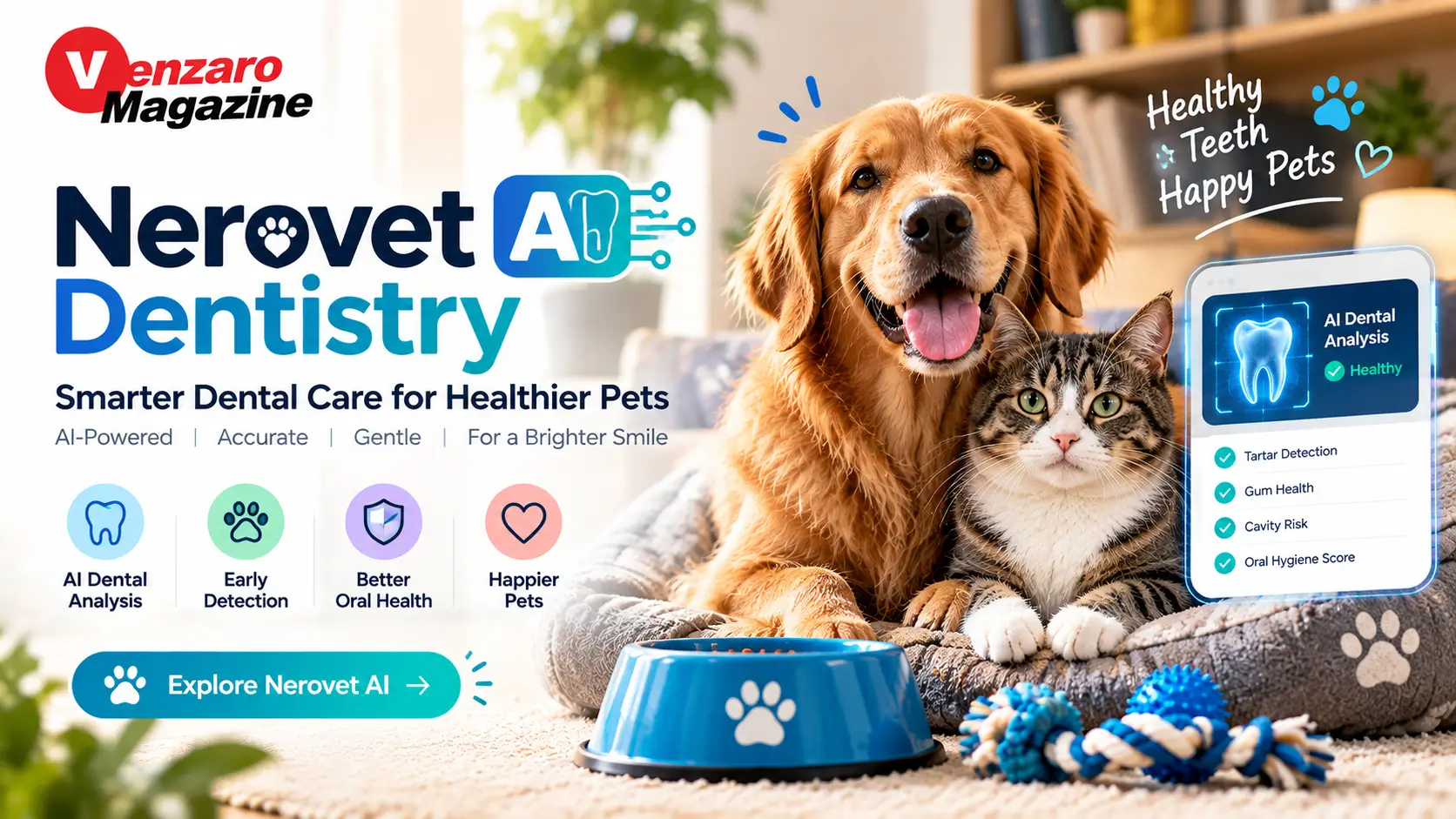
Nerovet AI Dentistry is a term associated with the use of artificial intelligence in veterinary dental care, particularly the analysis of dental images for dogs and cats. The concept brings together veterinary expertise, digital imaging, and computer-based pattern recognition to help identify possible oral health problems and support clinical decision-making.
Dental disease is an important concern for pet owners because many problems develop gradually and may not be obvious during everyday activities. A dog can continue eating despite dental discomfort, while a cat may show few visible signs of an oral condition. Professional examinations and appropriate dental imaging can help veterinarians investigate these hidden problems.
Artificial intelligence offers another way to review dental images and organize clinical information. Systems designed for this purpose may highlight suspicious areas, help structure findings, and make it easier to explain potential problems to pet owners. However, AI-generated observations are not the same as a confirmed diagnosis.
For readers exploring Nerovet AI Dentistry, one distinction matters from the beginning: the broader use of AI in veterinary dentistry is a genuine technological development, while the performance, clinical validation, and practical capabilities of any particular platform must be assessed separately. Understanding this difference helps pet owners and veterinary professionals evaluate the technology without relying on exaggerated promises.
What Is Nerovet AI Dentistry?
Nerovet AI Dentistry is associated with an AI-focused approach to animal dental health. Its online presence describes technology intended to assist veterinary professionals with dental image analysis and the identification of potential oral health concerns in pets.
In practical terms, veterinary dental AI involves software that processes dental images and searches for patterns associated with abnormalities. Depending on the particular system, these patterns may relate to periodontal changes, damaged teeth, tooth resorption, or other findings that require professional assessment.
The purpose of such software is to support veterinary work rather than replace it. A veterinarian must still consider the animal’s symptoms, medical history, physical examination, imaging quality, and other relevant clinical findings before deciding what a result means.
It is also important to distinguish between the general concept and the individual product. Although Nerovet has an online presence describing AI-powered pet dentistry, detailed claims about its accuracy, clinical performance, regulatory status, and effectiveness should not automatically be treated as independently established facts.
For readers, the most useful starting point is to understand what veterinary dental AI can potentially accomplish, where it may be helpful, and what evidence is needed before trusting a specific system.
How Does AI Work in Veterinary Dentistry?
Artificial intelligence systems used for dental imaging generally rely on machine learning. This is a branch of computing in which software learns patterns from examples rather than depending exclusively on manually written rules.
For dental applications, developers may train an AI model using dental images that have been reviewed and annotated by qualified professionals. The model learns relationships between visual features and the findings represented in those examples. When it receives a new image, it applies the learned patterns to identify areas that may deserve further attention.
The process can be understood through several stages.
1. Capturing Dental Images
The process begins with suitable dental imaging. Veterinary professionals may use dental radiographs, commonly called X-rays, to examine structures that cannot be assessed fully by looking at the visible surface of the teeth.
Dental radiographs can help reveal information about tooth roots, surrounding bone, and abnormalities beneath the gumline. The images must be sufficiently clear and appropriately positioned for meaningful interpretation.
AI software cannot reliably compensate for every imaging problem. If important anatomy is missing, the image is blurred, or positioning is unsuitable, the results may be incomplete or misleading.
2. Processing the Images
Once an image is available, the software processes its visual information. Depending on the model, this may involve identifying anatomical structures, detecting patterns, or locating regions that resemble abnormalities represented in the training data.
The output might include highlighted areas, labels, measurements, or a preliminary summary. The exact functions vary between systems, so users should confirm what a particular platform actually provides.
3. Identifying Areas for Review
An AI model may flag a region that appears consistent with a possible dental problem. This can help direct the veterinarian’s attention to areas that warrant closer examination.
However, a highlighted region does not automatically establish that a disease exists. Normal anatomical variations, image artefacts, and conditions not adequately represented in the training data may affect the result.
The veterinarian must determine whether the finding is clinically meaningful and whether additional examination or imaging is necessary.
4. Reviewing the Results
The final stage involves professional interpretation. The veterinarian compares the AI output with the original image and the wider clinical picture.
This step is essential because software can identify patterns without fully understanding an individual animal’s circumstances. The veterinarian remains responsible for determining the diagnosis, discussing treatment options, and explaining the expected benefits and risks.
Potential Applications of Nerovet AI Dentistry
The potential value of Nerovet AI Dentistry is best understood through the wider applications of AI in veterinary oral healthcare. These applications illustrate what dental AI may support, but they should not be interpreted as confirmation that every feature is available in a specific Nerovet product.
Dental Image Analysis
One of the most relevant applications is assisting with the review of dental radiographs. AI software may identify patterns that resemble bone changes, abnormalities around tooth roots, or other findings that require closer inspection.
This can provide an additional review layer during a dental assessment. Nevertheless, the system’s usefulness depends on the quality of its training, the type of image it supports, and the reliability of its results in the intended patient population.
Supporting Periodontal Assessment
Periodontal disease affects the tissues that support the teeth, including the gums and surrounding bone. It can progress without obvious external signs, particularly in its earlier stages.
AI tools may assist with identifying imaging features associated with periodontal changes. Their output must be interpreted alongside a proper veterinary examination because dental radiographs do not reveal every aspect of gum health.
Early identification is useful only when followed by an appropriate clinical response. Software cannot independently provide the examination, cleaning, treatment, or follow-up an animal may need.
Identifying Possible Tooth Resorption
Tooth resorption is a painful dental condition commonly encountered in cats. It involves the breakdown of tooth structure and may require detailed dental evaluation to establish its extent.
AI-assisted imaging may help draw attention to suspicious areas in a dental radiograph. However, the ability of any particular model to identify these lesions reliably must be demonstrated through appropriate testing.
Pet owners should not assume that an AI-generated report can establish the presence or severity of tooth resorption without a veterinarian’s interpretation.
Supporting Clinical Documentation
Another potential application is organizing dental findings into a structured report. When properly implemented, this may help veterinary teams document observations consistently and explain imaging findings more clearly.
The value of this function depends on the quality of the generated information and the ability of clinicians to review and correct it. Automatically generated notes should not enter a medical record unchecked.
Improving Communication With Pet Owners
Dental findings can be difficult for pet owners to understand, especially when the problem is not visible in a photograph of the animal’s mouth.
Visual annotations and clearly organized reports may help veterinarians explain why further investigation or treatment is recommended. This can support informed discussions, provided the images and explanations accurately reflect the animal’s condition.
AI should improve understanding rather than make treatment recommendations appear more certain than the available evidence supports.
Potential Benefits of AI-Assisted Pet Dental Care
The benefits of veterinary dental AI depend on the software, the clinic’s workflow, and the quality of professional oversight. When these elements work together, the technology may offer several practical advantages.
More Consistent Image Review
Human interpretation can vary with experience, workload, and the complexity of a case. AI may provide a standardized additional review by applying the same computational process to each supported image.
Consistency, however, is not identical to correctness. A model can produce the same type of error repeatedly, so standardization must be accompanied by performance monitoring and clinical review.
Support for Earlier Investigation
When an AI system flags a potentially important finding, the veterinarian may be prompted to investigate it sooner. This could be useful when abnormalities are subtle or difficult to recognize.
The technology does not guarantee early detection. Its ability to identify a condition depends on the image, the model’s training, and whether the relevant abnormality is within its validated capabilities.
More Efficient Workflows
Reviewing and documenting dental images takes time. Software that assists with image organization, preliminary screening, or report preparation may reduce some repetitive tasks.
Whether a clinic actually saves time depends on how much manual correction is required, how easily the software integrates with existing equipment, and whether staff need additional training.
Clearer Patient Discussions
A well-designed visual report may make it easier to explain a dental concern and discuss possible next steps. Pet owners can ask more informed questions when they understand what the veterinarian has observed and why it matters.
This is particularly valuable when an animal appears comfortable despite an underlying dental problem.
Support for Record Keeping
Consistent documentation can help clinics compare findings across visits, communicate with other veterinary professionals, and maintain a clearer record of clinical decisions.
Such benefits depend on secure data handling and appropriate integration with the clinic’s existing record system. AI-generated documentation should remain subject to professional review.
Understanding the Limitations of Veterinary Dental AI
AI can be useful, but its limitations deserve as much attention as its potential advantages. Veterinary dentistry involves living animals, varied anatomy, different disease patterns, and clinical circumstances that cannot be reduced to image recognition alone.
AI Can Produce Incorrect Results
An AI system may overlook an abnormality or flag a normal structure as suspicious. These errors can occur when images are unclear, the model has limited training examples, or a case differs from the data used during development.
A negative AI result does not prove that an animal has healthy teeth. Likewise, a positive result does not automatically mean that disease is present.
Image Analysis Is Not a Complete Examination
Dental radiographs provide valuable information, but they are only one part of a dental assessment. A veterinarian may also need to evaluate the gums, inspect individual teeth, assess pain, review the animal’s medical history, and consider other diagnostic findings.
AI cannot independently perform all these tasks merely by analysing an image.
Performance May Differ Between Animals
A model developed using one population of animals may not perform equally well across all breeds, ages, anatomical variations, or clinical conditions.
Its results may also differ depending on the imaging equipment and image quality. Veterinary teams should understand the population and circumstances in which the software has been tested.
Accuracy Claims Require Context
A product may advertise a high accuracy percentage, but the figure is difficult to interpret without further information.
Important questions include:
- What condition was the system tested to detect?
- How many images and animals were included?
- Were the test images separate from the training data?
- Were the results reviewed against an appropriate professional reference standard?
- How often did the system miss genuine disease?
- How often did it flag problems that were not present?
- Were the findings independently evaluated?
These details matter because an overall accuracy figure can conceal important differences between conditions. A tool that performs well on one type of dental abnormality may perform less reliably on another.
For Nerovet AI Dentistry, any specific performance claim should be assessed using the relevant supporting evidence rather than accepted solely because it appears in promotional material.
AI Does Not Replace Veterinary Responsibility
Treatment decisions involve more than identifying a possible abnormality. A veterinarian must consider the animal’s comfort, overall health, the severity of the condition, available treatment options, and the potential consequences of delaying care.
AI can support this process, but it should not make the final decision independently. Professional responsibility remains central to safe veterinary dentistry.
Nerovet AI Dentistry and Traditional Veterinary Dental Care
AI-assisted dentistry and traditional veterinary dentistry should not be viewed as competing approaches. The more useful comparison is between a dental workflow that relies on professional interpretation alone and one that also uses validated software to support that interpretation.
| Aspect | Traditional dental workflow | AI-assisted dental workflow |
|---|---|---|
| Image interpretation | Performed by veterinary professionals | Professional interpretation supported by software |
| Identifying abnormalities | Based on clinical examination and image review | May include automated alerts and highlighted regions |
| Clinical judgment | Provided by the veterinarian | Remains the veterinarian’s responsibility |
| Documentation | Prepared by the clinical team | May include automated reporting assistance |
| Limitations | Human error and variation in interpretation | Human error plus possible software errors |
| Treatment decisions | Based on the clinical findings | Based on clinical findings, with AI as an optional aid |
The table describes general workflow differences rather than independently verified features of Nerovet.
An AI-assisted workflow may be useful when it adds reliable information without introducing unnecessary complexity. However, a clinic should not assume that adopting new software automatically improves care. The system must demonstrate value in the cases the clinic actually treats.
What Should Veterinary Clinics Consider Before Using Nerovet AI Dentistry?
Veterinary practices considering an AI dental platform should evaluate it as a clinical technology, not simply as a convenient software subscription.
Clinical Validation
The first question is whether the product has been tested appropriately. Clinics should look for information about the conditions it can identify, the types of images it supports, and its performance on data that were not used to train the model.
Independent validation is particularly valuable because it helps establish whether advertised performance is reproducible outside the developer’s own testing environment.
Compatibility With Existing Equipment
A clinic should determine whether the software accepts its current imaging formats and works with its existing computers and record-keeping systems.
Compatibility problems can create extra work, delay image review, or require additional equipment. Before purchasing a product, veterinary teams should request a demonstration using representative images from their normal workflow.
Data Privacy and Security
Dental images and associated records may contain identifiable client information. Clinics should understand how information is stored, transmitted, processed, and retained.
Questions worth asking include whether data are encrypted, who can access them, whether they are used to train AI models, and how deletion requests are handled. The clinic should also establish whether the service meets the privacy and data-protection requirements applicable to its location.
Pricing and Ongoing Costs
The total cost of an AI dental platform may extend beyond the initial subscription. Training, integration, technical support, equipment requirements, and future renewals can affect the overall investment.
Clinics should request clear pricing information and compare the cost with realistic operational benefits. Promised efficiency gains should be measured rather than assumed.
Training and Technical Support
Even an apparently simple system requires appropriate training. Staff need to understand how to upload images correctly, interpret automated findings, recognize limitations, and report technical problems.
A useful provider should explain the product’s intended purpose and limitations in understandable terms. Clinics should be cautious if they cannot obtain clear answers about technical support, validation, or appropriate use.
What Should Pet Owners Know About Nerovet AI Dentistry?
Pet owners do not generally need to choose a particular AI platform to protect an animal’s oral health. Their priority should be finding qualified veterinary care and ensuring that dental concerns receive appropriate attention.
If a veterinary clinic says it uses AI-assisted dental imaging, owners can ask how the software contributes to the examination and whether a veterinarian reviews its findings.
Useful questions include:
- What dental problem has the software identified or highlighted?
- Does the veterinarian agree with the AI-generated finding?
- Is additional examination or imaging necessary?
- What treatment options are available, and why are they recommended?
- What are the potential risks of postponing treatment?
- How will the clinic monitor the animal’s dental health over time?
These questions help keep the discussion focused on the animal’s individual needs rather than the novelty of the technology.
Owners should also understand that a normal-looking mouth does not rule out dental disease. Changes in eating habits, difficulty chewing, unusual drooling, oral bleeding, facial swelling, or persistent bad breath can justify veterinary assessment. Difficulty eating or obvious pain should not be ignored while waiting for an AI-based assessment.
Home brushing with an appropriate pet toothbrush and veterinary-recommended toothpaste can support preventive care. Human toothpaste should not be used for pets, and home care should not be treated as a substitute for professional examination or necessary dental treatment.
Is Nerovet AI Dentistry Suitable for Every Veterinary Practice?
Not necessarily. The suitability of AI-assisted dental technology depends on a clinic’s caseload, equipment, staff experience, budget, and clinical needs.
A practice that regularly performs dental radiography may have different requirements from one that refers complex dental cases to a specialist. A clinic should first identify the specific problem it wants to solve.
For example, if documentation is the main challenge, a system with strong reporting and record integration may be more useful than one focused primarily on image annotation. If the goal is to support radiograph interpretation, the clinic should prioritize evidence showing how well the software performs on the conditions it encounters.
Smaller practices should also consider whether the software adds meaningful value after accounting for subscription costs and training time. In some circumstances, improving existing imaging procedures, documentation standards, or staff education may be a more appropriate first step.
There is no universal rule that every clinic needs AI. The technology should be adopted when its demonstrated benefits justify its costs and limitations.
The Future of Artificial Intelligence in Veterinary Dentistry
The wider development of AI in veterinary medicine may create new opportunities for dental assessment, documentation, and preventive care. However, the practical value of these developments will depend on careful research and responsible implementation.
Better Support for Complex Images
Future systems may become better at identifying anatomical structures, distinguishing between different types of abnormalities, and communicating uncertainty. These improvements would be meaningful if they were demonstrated through rigorous testing across varied clinical settings.
More Integrated Clinical Records
AI tools may increasingly connect image interpretation with patient records and reporting systems. Such integration could reduce duplicate data entry and make relevant information easier for veterinary teams to review.
The challenge will be ensuring that automated outputs remain accurate, traceable, and subject to appropriate professional oversight.
More Transparent Performance Reporting
As AI becomes more widely used in animal healthcare, veterinary professionals will need clearer information about how systems are evaluated. Transparent reporting of errors, limitations, and performance across different populations can help clinics make better purchasing decisions.
A Continued Role for Veterinary Expertise
Technology is unlikely to remove the need for professional examination and clinical judgment. Instead, the most useful developments will be those that help veterinarians make informed decisions while preserving their ability to question automated results.
For Nerovet AI Dentistry specifically, future expectations should be distinguished from confirmed capabilities. The direction of the wider industry may indicate possible opportunities, but it does not establish that a particular product already offers them.
Frequently Asked Questions About Nerovet AI Dentistry
1. What is Nerovet AI Dentistry?
Nerovet AI Dentistry is associated with AI-assisted veterinary dental imaging and pet oral healthcare. Its online descriptions present an approach intended to help veterinary professionals review dental images and identify potential abnormalities. The exact capabilities and independently validated performance of the platform should be confirmed before making clinical or purchasing decisions.
2. Does Nerovet AI Dentistry focus on humans or animals?
The Nerovet platform discussed in connection with this keyword presents itself as focused on veterinary dental care, particularly for dogs and cats. This differs from AI systems developed specifically for human dental clinics. Users should verify the intended species and supported imaging types of the particular product they are considering.
3. Can AI detect dental disease in dogs and cats?
Some AI systems can analyse veterinary dental images for patterns associated with possible abnormalities. Their performance depends on the condition being assessed, image quality, model design, and clinical validation. An AI result should always be interpreted within an appropriate veterinary examination.
4. Can Nerovet AI Dentistry replace a veterinarian?
No. AI-assisted imaging cannot replace a veterinarian’s clinical examination, professional judgment, or responsibility for diagnosis and treatment. Software may support image interpretation, but a qualified professional must determine what the findings mean for an individual animal.
5. Is Nerovet AI Dentistry accurate?
A definitive assessment requires reliable performance data for the specific system. Promotional accuracy figures alone are insufficient to establish clinical reliability. Prospective users should examine the testing methods, sample sizes, types of conditions evaluated, error rates, and independent validation evidence.
6. Can pet owners use AI dental tools at home?
AI dental imaging tools intended for veterinary professionals may require specialized images, equipment, or clinical interpretation. A consumer should not assume that an ordinary photograph of a pet’s teeth can provide a reliable diagnosis. If a pet shows signs of oral discomfort, a veterinary examination is the appropriate next step.
7. Does AI dental imaging eliminate the need for dental X-rays?
No. AI analysis depends on the images supplied to it, and dental radiographs remain important for examining structures beneath the gumline when clinically indicated. AI does not remove the need for appropriate imaging or other diagnostic procedures.
8. What should a clinic check before purchasing Nerovet AI Dentistry?
A clinic should confirm the product’s capabilities, independent validation, compatibility with existing equipment, data-protection practices, pricing, training requirements, and technical support. It should also establish how veterinary professionals will review AI-generated findings.
9. Is Nerovet AI Dentistry suitable for every pet?
AI-assisted dental analysis is not a universal solution for every animal or condition. Its usefulness depends on the available images, the system’s validated scope, and the clinical circumstances. A veterinarian should determine which examinations and diagnostic methods are appropriate for the individual pet.
10. Is Nerovet AI Dentistry the future of pet dental care?
AI may become an increasingly useful part of veterinary dentistry, especially for image review and documentation. However, its long-term contribution will depend on demonstrated clinical value, transparent performance testing, responsible data practices, and continued professional oversight. It is more accurate to view AI as a potential support tool than as a complete replacement for existing veterinary care.
Conclusion
Nerovet AI Dentistry represents an area of interest at the intersection of artificial intelligence and veterinary oral healthcare. AI-assisted dental imaging has the potential to help veterinary professionals review images, organize findings, and communicate possible dental problems more clearly.
Its usefulness, however, depends on evidence rather than technological claims alone. Image quality, clinical validation, software limitations, privacy safeguards, and professional interpretation all influence whether an AI system can contribute meaningfully to a veterinary practice.
For pet owners, the most important consideration remains the quality of the animal’s care. For veterinary clinics, the priority should be determining whether a particular AI platform offers measurable benefits for their patients and workflows. When used responsibly and supported by reliable evidence, AI may complement veterinary expertise while keeping professional judgment at the centre of dental care.
RELATED POST: Rodwajlery: Meaning, Rottweiler Breed, Temperament, Training & Care