




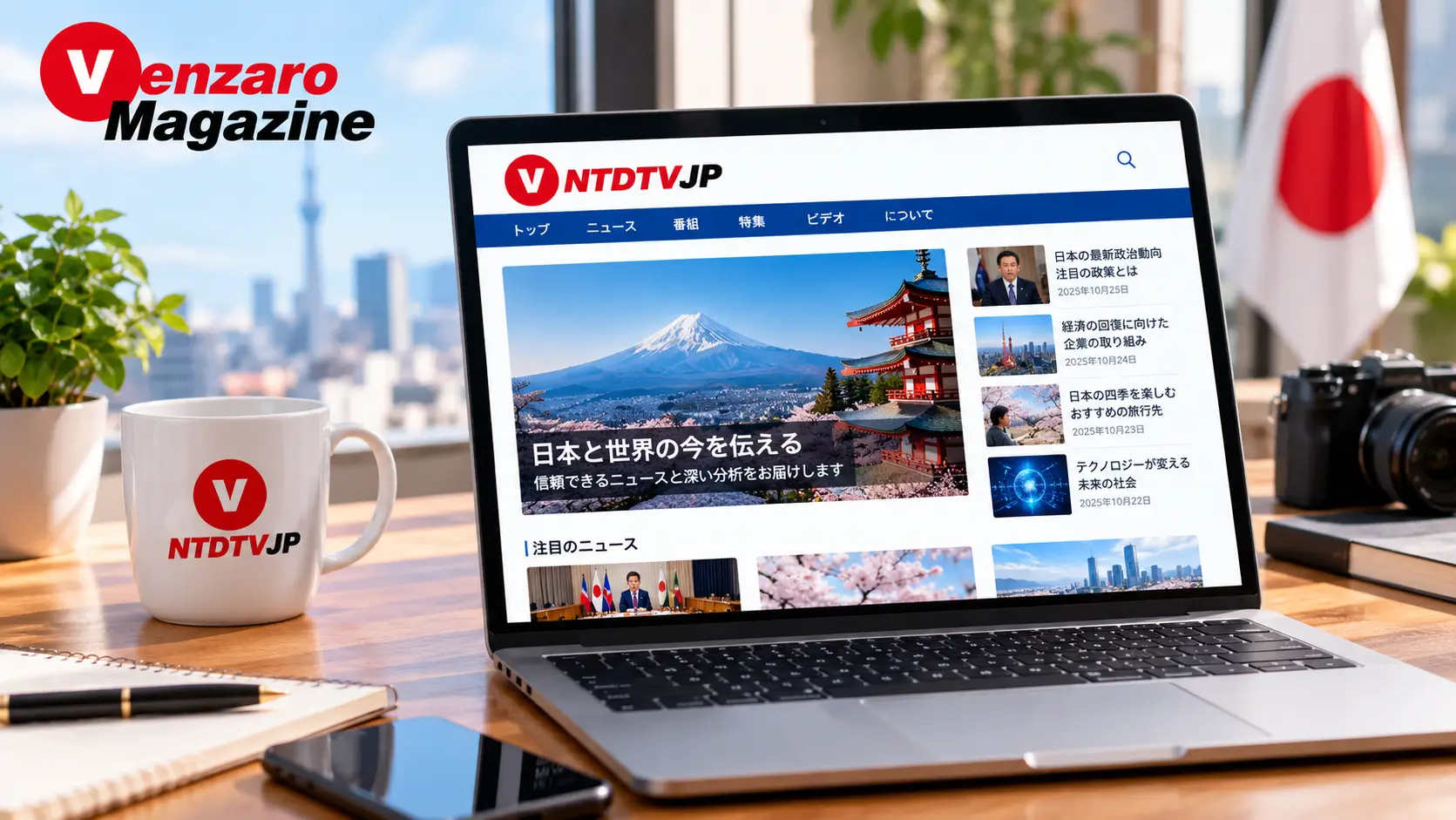
In a world where news travels across borders within seconds, understanding the source and perspective behind a story is increasingly important. NTDTVJP is a name associated with the Japanese-language media presence of New Tang Dynasty Television (NTD), an international broadcaster established in New York in 2001. Its Japanese-language service provides access to news and other media content covering China, international affairs, and cultural subjects.
For readers encountering NTDTVJP for the first time, several questions naturally arise. What does the name mean? What kind of information does the platform publish? How can readers find its content, and how should they assess the accuracy of its reporting? Understanding these points helps audiences distinguish the organization from similarly named media brands and make more informed decisions about the news they consume.
This guide examines NTDTVJP’s identity, its connection to the wider NTD network, the types of content associated with its Japanese-language service, and practical ways to evaluate its reporting. It also considers the importance of editorial perspective and independent verification when using any news outlet.
What Is NTDTVJP?
NTDTVJP is the identifier used for New Tang Dynasty Television’s Japanese-language media presence. The abbreviation combines NTDTV, the broadcaster’s commonly used name, with JP, a familiar abbreviation for Japan or Japanese-language content.
The organization’s Japanese-language website describes its role as communicating information about China and the wider world in Japanese, alongside content related to traditional culture. Its published information also identifies the service as part of the Epoch Media Group, which it describes as a nonprofit organization.
This background provides a useful starting point for understanding the name. NTDTVJP should not be treated as an entirely separate media organization simply because it has a regional identifier. It is associated with the broader NTD network, while its Japanese-language output is intended to make content accessible to people who prefer to read or watch material in Japanese.
The distinction between a parent broadcaster and a language-specific service matters. International media organizations often distribute material through different websites, video channels, and social accounts to reach audiences across linguistic boundaries. A regional channel may publish translated reporting, locally relevant coverage, or programs prepared specifically for its intended audience.
However, the exact mix of original and adapted material can change. Readers should consult the relevant publication or channel rather than assuming that every item is translated from another language or produced exclusively for Japan.
The Background of New Tang Dynasty Television
New Tang Dynasty Television, generally shortened to NTD, was established in New York in 2001. Its official website describes the organization as an international television network that distributes news, analysis, documentaries, and cultural programming in multiple languages.
The network’s multilingual approach allows it to address audiences who might otherwise encounter language barriers when following international developments. A report about a major political event, for example, can reach a Japanese-speaking audience through Japanese-language presentation rather than requiring viewers to understand English or Chinese.
NTD’s stated editorial mission emphasizes independent reporting, international affairs, and cultural traditions. These statements help explain how the organization presents its purpose, but they should be understood as the broadcaster’s own description rather than independent proof of editorial neutrality.
That distinction is important when assessing any media organization. A publisher’s mission statement explains what it aims to accomplish; evaluating whether its journalism consistently achieves those aims requires examining published reports, supporting evidence, corrections, and the treatment of competing perspectives.
NTDTVJP is best understood within this wider context. Its Japanese-language identity connects audiences to a larger international media operation, while its language focus makes the content more accessible to Japanese-speaking readers and viewers.
What Kind of Content Can Readers Expect?
The NTD network’s published description identifies several broad areas of activity, including news, analysis, documentaries, and cultural programming. Its Japanese-language website also features categories related to China, video news, commentary, stories, history, and culture.
The availability and prominence of individual subjects may vary over time. Nevertheless, these categories provide a useful overview of the kinds of material readers may encounter.
News About China and International Affairs
Coverage of China and international developments forms an important part of NTD’s public-facing identity. Such reporting can include political decisions, diplomatic relationships, social issues, economic developments, and events with implications beyond a single country.
For Japanese-speaking audiences, language accessibility can make complex international subjects easier to follow. Readers may be able to understand the basic facts of an event without first consulting a foreign-language report.
However, international reporting often involves competing interpretations. Government announcements, opposition statements, expert assessments, and independent investigations may describe the same event differently. A responsible reader should distinguish confirmed events from claims made by interested parties.
When a report discusses a disputed issue, useful questions include whether it identifies its sources, supplies relevant dates and documents, and explains which details remain uncertain. These checks are more informative than judging a report solely by whether its headline agrees with an existing opinion.
Video News and Documentary-Style Reporting
NTD distributes video content as part of its broader media operation, and its Japanese-language service has an associated YouTube presence. Video can help audiences understand events through interviews, recorded statements, footage, and visual explanations.
A documentary or extended report may provide more room for context than a brief headline. It can explain the background to a policy decision, introduce people affected by an event, or connect a current development with earlier events.
Nevertheless, video is not automatically more reliable than written journalism. Editing, narration, image selection, and the order in which information appears can influence a viewer’s interpretation. A short excerpt may also omit qualifications that appear in the complete interview.
Viewers should therefore consider the original context of important quotations and footage. When a video makes a substantial factual claim, checking the relevant document, full statement, or independent reporting can help establish what the available evidence actually supports.
Cultural and Historical Programming
Cultural content is another stated part of NTD’s mission. The network describes an interest in traditional culture, arts, and stories that explore historical and social themes.
Such programming serves a different purpose from breaking news. Instead of concentrating on an event as it unfolds, a cultural feature may examine traditions, historical developments, artistic practices, or ideas that have influenced communities over time.
For international audiences, this material can provide context that is sometimes missing from brief current-affairs coverage. Understanding historical relationships, for example, can make modern political or social developments easier to interpret.
Even so, cultural and historical claims benefit from careful sourcing. Historical interpretation may differ between scholars, communities, and national traditions. A useful feature should make clear when it is describing established evidence and when it is presenting a particular interpretation.
Commentary and Analysis
News analysis attempts to explain why an event matters, how it developed, and what its possible consequences might be. Commentary may go further by expressing an author’s judgment about the event.
Both formats can help readers understand complicated subjects, but they should not be confused with straightforward factual reporting. An analysis can rely on verified facts while still reaching a debatable conclusion. An opinion article may make a persuasive argument without representing a universally accepted interpretation.
Readers should look for clear distinctions between reporting, analysis, and opinion. They should also consider whether an article acknowledges relevant counterarguments or leaves out important context.
This approach is especially valuable when following politically sensitive international stories, where language choices and assumptions can influence how audiences understand the evidence.
How to Find NTDTVJP Content
People searching for NTDTVJP may encounter a website, a video channel, or social media posts. Because names and logos can be copied, it is sensible to confirm that a page actually belongs to the organization before relying on it.
The Japanese-language NTD website provides information about the network and links to associated distribution channels. Its published contact and social media information can serve as a starting point for confirming a channel’s identity.
A practical approach is to check the following details:
- Publisher identity: Look for an identifiable organization and an appropriate About or contact page.
- Channel links: Check whether the organization’s website links to the video channel or social account you have found.
- Naming consistency: Compare the account name, branding, and descriptions with information published by the organization itself.
- Publication dates: Confirm when a report was published and whether a video is being shared in its original form.
- Context: Open the complete article or video rather than relying only on a short excerpt or social media caption.
These checks are particularly useful when a search result contains a similar name or a third-party article describing the platform. A page that discusses NTDTVJP is not necessarily operated by NTD itself.
Readers should also distinguish the broadcaster’s official channels from websites that publish independent articles about the keyword. The similarity of a domain name, title, or logo alone is not enough to establish an official relationship.
Who Might Find NTDTVJP Useful?
NTDTVJP may be relevant to several groups of readers, depending on the content available and their language preferences.
Japanese-Speaking Readers Interested in International News
Readers who follow international affairs may find Japanese-language reporting useful when they want to explore developments involving China and other parts of the world.
Language accessibility can reduce the effort required to understand complicated topics. It can also make interviews and explanatory features easier to follow without constantly translating unfamiliar terminology.
However, no single publication can provide a complete account of every international issue. Comparing reports from different outlets helps readers identify areas of agreement, differences in emphasis, and questions that remain unresolved.
Students and Readers Exploring Media Perspectives
People studying journalism, international relations, or media literacy may find different news outlets useful as examples of how publications frame the same event.
Comparing coverage can reveal differences in headline wording, source selection, background information, and the distinction between reporting and opinion. These differences can be educational when readers evaluate them systematically instead of assuming that one outlet must be correct about everything.
Students should prioritize original documents and credible reporting when establishing facts. Articles and videos can help identify questions to investigate, but they should not replace the evidence needed to answer those questions.
Audiences Interested in Culture and History
Readers interested in traditional culture, historical subjects, and cultural storytelling may also explore NTD’s programming.
These interests can complement current-affairs coverage by providing a broader understanding of the traditions and historical experiences that influence public life.
The relevance of any particular program depends on its subject, sourcing, and presentation. Readers should evaluate cultural features on their own merits rather than assuming that every item from a media network has the same purpose or evidentiary standard.
Is NTDTVJP a Reliable News Source?
Reliability is one of the most important questions to consider when evaluating a media outlet. The answer should not depend only on the organization’s stated mission, its visual presentation, or the popularity of its videos.
NTDTVJP is associated with an identifiable international broadcaster, and the Japanese-language website provides information about the network and its content. Those details help establish the platform’s identity. They do not, by themselves, prove that every individual report is accurate, complete, or free from bias.
A more useful approach is to assess the evidence behind each important claim.
Examine the Sources
A strong news report makes it possible to understand where its central information came from. Depending on the subject, this might include official documents, recorded statements, named interviewees, published research, or direct observations.
If an article makes a significant allegation but does not provide enough information to evaluate it, look for independent reporting or original documentation before accepting the claim.
Anonymous sources are not automatically invalid, but their use should be considered in context. The reader should be able to understand why anonymity may have been necessary and whether the report provides sufficient corroboration.
Separate Facts From Interpretation
An article may combine established facts with explanations about what those facts mean. The factual elements and the interpretation deserve separate consideration.
For example, a report might accurately describe a new government policy while offering an interpretation of its likely political consequences. The announcement can be verified through official documentation, while the predicted consequences may require additional evidence and remain uncertain.
Recognizing this difference makes it easier to assess reporting fairly without dismissing useful analysis or treating every prediction as an established fact.
Compare Independent Coverage
When a story has significant public importance, consult more than one credible source. Ideally, choose publications with different editorial backgrounds and look for evidence that can be checked independently.
Agreement between sources is most meaningful when they rely on separate reporting or original evidence. Several websites repeating the same unverified statement do not necessarily provide independent confirmation.
Comparison also helps reveal missing context. One outlet may explain the policy background, another may provide economic information, and a third may include responses from people directly affected by the event.
Review Corrections and Updates
News develops as new information becomes available. Initial reports may be incomplete, and early descriptions of an event can require revision.
Look for dates, updates, correction notices, and explanations of material changes. A publication’s handling of errors can offer useful insight into its editorial practices.
The same standard should apply to every outlet, including major broadcasters, specialist publications, and digital-first news organizations. Reliability is better assessed through observable reporting practices than through broad claims of perfect neutrality.
Understanding Editorial Perspective and Potential Bias
Every media organization makes editorial decisions. It chooses which events to cover, which sources to interview, how much background to provide, and which details to emphasize.
These choices do not automatically make a report false. However, they can shape the picture that audiences receive.
NTD’s public materials emphasize independent news, international affairs, human rights, and traditional culture. These stated priorities help readers understand the subjects the organization wants to cover. They also provide a reason to examine how those priorities influence particular stories.
A fair evaluation should consider the evidence rather than relying on labels alone. Ask whether a report supports its claims, represents relevant opposing positions accurately, distinguishes allegations from established findings, and corrects important errors.
It is also useful to distinguish factual accuracy from editorial balance. A report may accurately document a particular event without including every possible perspective. Conversely, presenting two opposing claims does not guarantee accuracy if one claim is unsupported by evidence.
The goal is not to assume that all news outlets are equally reliable or that every report is biased in the same way. It is to evaluate each story according to the quality of its evidence, transparency, and handling of uncertainty.
NTDTVJP and the Changing Digital News Landscape
Digital distribution has changed how audiences discover and consume journalism. Readers can now move from a website to a video platform or social network within seconds, while news organizations can reach audiences outside their home countries.
For a Japanese-language service associated with an international network, this model offers a way to make cross-border reporting accessible to people who prefer Japanese. It also means that content may circulate beyond its original website through clips, reposts, and summaries.
This convenience brings challenges. Social media posts can remove important context, older reports can be mistaken for current news, and misleading captions can change the apparent meaning of a video.
Search results also contain a mixture of official sources, independent commentary, copied material, and pages optimized primarily to attract visitors. A polished website does not necessarily indicate strong journalism, just as an unfamiliar design does not automatically prove that a publisher is untrustworthy.
Readers can respond by tracing important claims back to their original sources, checking publication dates, and avoiding conclusions based only on headlines or short clips.
Digital media literacy is therefore part of understanding NTDTVJP. Knowing what a platform is represents only the first step; understanding how to interpret its material is equally important.
Practical Tips for Getting More From NTDTVJP
Readers can develop a more informed approach to the platform by following a few straightforward habits.
First, identify the type of content being presented. A news report, documentary, interview, and opinion piece may address the same subject but serve different purposes.
Second, pay attention to dates. An accurate article from several years ago may no longer describe the current situation, especially when it concerns government policy, elections, international disputes, or economic conditions.
Third, identify the main factual claim. Summarizing it in one sentence makes it easier to check against primary documents and independent coverage.
Fourth, distinguish evidence from language designed to influence emotions. Strong wording can attract attention, but it does not establish that the underlying claim is true.
Finally, remain open to revising an initial judgment. New evidence can change the interpretation of an event, and responsible news consumption requires acknowledging uncertainty when the available information is incomplete.
These habits are useful regardless of whether a reader follows NTDTVJP, a public broadcaster, a newspaper, or an independent digital publication.
Frequently Asked Questions About NTDTVJP
What does NTDTVJP stand for?
NTDTVJP is associated with New Tang Dynasty Television’s Japanese-language media presence. The JP suffix indicates a connection to Japan or Japanese-language content.
Is NTDTVJP connected to New Tang Dynasty Television?
Yes. The Japanese-language NTD website identifies its service as part of the wider NTD media operation and links to associated Japanese-language distribution channels.
What subjects does NTDTVJP cover?
The wider NTD network describes its output as including news, analysis, documentaries, and cultural programming. Its Japanese-language website includes categories related to China, video news, commentary, stories, history, and culture. Specific subjects vary by publication and program.
Can people outside Japan access Japanese-language NTD content?
The network’s digital distribution includes online channels, making its content discoverable beyond Japan. However, access to individual programs may depend on the platform, regional availability, or language requirements.
Is NTDTVJP the same as every website using its name?
No. A third-party website can use NTDTVJP as a keyword or discuss the broadcaster without being an official NTD property. Verify ownership and channel links through the organization’s own published information.
Should NTDTVJP be the only source used for international news?
Relying on one outlet for every important story is not advisable. Comparing credible publications and consulting original documents where possible can provide additional context and help identify disputed claims.
How can readers check whether a story is accurate?
Check the publication date, identify the original sources, distinguish factual statements from commentary, and look for independent corroboration. For important allegations, seek supporting documentation rather than relying solely on a headline or social media excerpt.
Why is editorial perspective important?
Editorial perspective influences which stories receive attention and how information is presented. Understanding that perspective helps readers interpret coverage critically while still assessing individual claims according to the available evidence.
Conclusion
NTDTVJP is the Japanese-language media identity associated with New Tang Dynasty Television, an international broadcaster established in New York in 2001. Its Japanese-language service connects readers and viewers with content related to China, international affairs, news, and cultural subjects.
Understanding the platform involves more than recognizing its name. Readers benefit from knowing its relationship to the wider network, distinguishing official channels from third-party websites, and understanding the difference between factual reporting and editorial interpretation.
The most effective way to use any news source is to combine accessibility with critical evaluation. By checking sources, comparing independent reporting, reviewing dates, and remaining attentive to context, readers can make better-informed judgments about the information they encounter through NTDTVJP and the wider digital media environment.
RELATED POST: Pantagonar: What It Means, Where the Name Appears and What Can Be Verified