









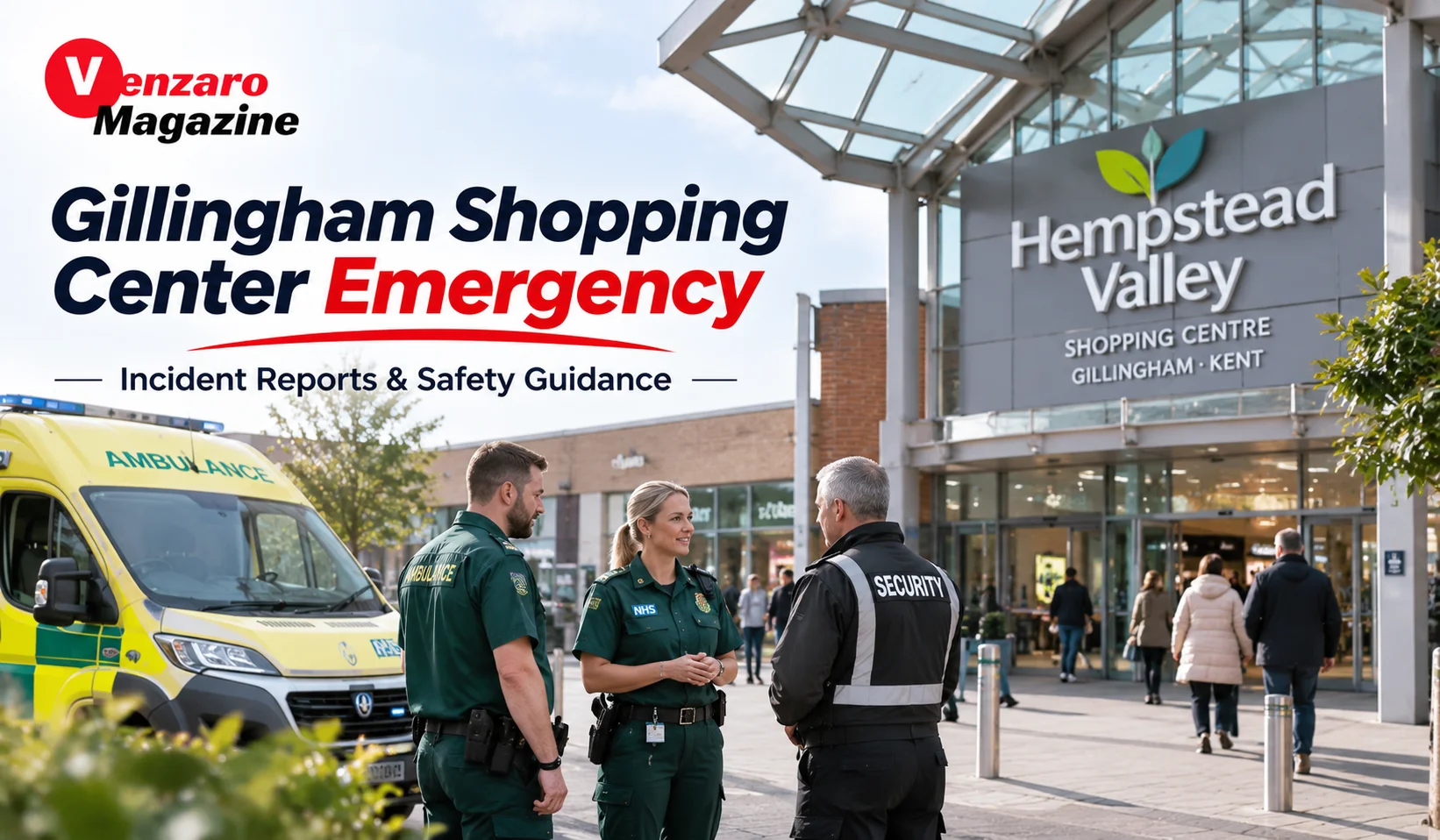
A routine shopping trip can change unexpectedly when emergency vehicles arrive, security teams begin directing visitors, or an area of a shopping centre is suddenly closed. For people nearby, the first concern is usually whether someone has been hurt and whether the location remains safe. This uncertainty has led many people to search for information about the Gillingham Shopping Center Emergency, particularly incidents associated with Hempstead Valley Shopping Centre in Kent, England.
Hempstead Valley is a well-known retail destination serving Gillingham and surrounding Medway communities. The shopping centre has been connected with several separately reported incidents involving emergency services, including serious medical emergencies and an earlier evacuation following a fire alarm.
However, the phrase Gillingham Shopping Center Emergency does not identify one officially named incident. Understanding what has actually been reported is important because unrelated emergencies can easily become confused when information spreads through online discussions.
The Shopping Destination at the Centre of Public Attention
Hempstead Valley Shopping Centre is located in the Gillingham area of Kent and serves shoppers from across Medway. Its retail stores, parking facilities, and surrounding services attract people visiting for everyday purchases, appointments, and leisure activities.
Like other busy retail environments, it brings together customers, employees, delivery vehicles, and visitors with different accessibility needs. Managing safety in such a setting requires coordination between centre management, security personnel, individual retailers, and emergency responders.
When ambulances, police vehicles, or fire engines appear near a shopping centre, people may naturally assume that a major incident is taking place. Yet emergency service attendance does not necessarily indicate a fire, criminal investigation, or danger to everyone inside the building.
Responders may attend for a medical emergency involving one person, investigate a security concern, or assist with a precautionary evacuation. The nature of the incident matters more than the number of emergency vehicles present.
What Reported Incidents Tell Us About the Gillingham Shopping Center Emergency
Public reporting has connected Hempstead Valley Shopping Centre with different emergency situations.
One serious incident involved emergency services attending the shopping centre’s car park area after a person required urgent assistance. Reports confirmed that a man died at the scene despite the attendance of responders.
A separate medical incident was reported near the shopping centre’s petrol station, where another man died. Police indicated that the circumstances were not being treated as suspicious.
The centre has also experienced a reported fire alarm evacuation, demonstrating how an emergency warning can temporarily interrupt normal shopping activities even when a major fire is not established.
These incidents should not be combined into a single event. They occurred under different circumstances and involved different emergency responses.
Importantly, reports of past incidents do not establish that an emergency is currently taking place.
Why Emergency Vehicles Sometimes Arrive Without a Full Evacuation
A shopping centre contains numerous areas with different safety considerations, including individual stores, restaurants, parking spaces, delivery access points, and pedestrian routes.
An emergency affecting one location does not always require the closure of the entire complex.
For example, paramedics responding to a medical incident may need access to a particular entrance or car park section. Police may temporarily restrict an area to protect someone’s privacy, preserve evidence, or allow emergency personnel to work safely.
Fire alarms involve a different response. Depending on the building’s safety arrangements and the circumstances, occupants may be instructed to evacuate immediately.
This explains why eyewitness accounts can sometimes appear contradictory. One visitor may report that shops remained open while another describes an area being closed.
Both observations could relate to different sections of the same location.
Accurate information should come from verified emergency service statements or shopping centre management rather than assumptions based solely on photographs or social media posts.
When a Fire Alarm Interrupts an Ordinary Shopping Trip
Fire alarms are designed to warn people about possible danger before a situation becomes more serious.
In a large shopping centre, an activated alarm may result in shoppers being directed toward designated exits while trained personnel assess the situation.
Not every alarm activation confirms that a fire has occurred. Smoke detectors, system faults, maintenance-related problems, or other conditions can sometimes trigger warnings without an established fire.
Nevertheless, visitors should treat an evacuation instruction seriously.
A person cannot reliably determine whether an alarm is genuine simply by looking around and seeing no smoke.
If centre staff instruct customers to leave, the safest response is to follow the designated route and continue toward the instructed assembly area or another safe location.
Returning to retrieve purchases or personal belongings can create unnecessary risks and delay evacuation.
The Emergency Response Happens Faster When People Cooperate
During a serious incident, emergency personnel need clear access to the affected area. Crowds gathering near entrances, vehicles blocking access routes, or visitors stopping to film can complicate the response.
Police, firefighters, paramedics, and shopping centre staff have different responsibilities.
Paramedics focus on assessing and treating patients. Firefighters may deal with fire hazards, rescue operations, or other safety concerns. Police can assist with managing access, maintaining public safety, and investigating circumstances when required.
Shopping centre security teams help communicate instructions and guide people away from restricted locations.
For shoppers, cooperation is often more useful than trying to determine the full details of an incident while it is still unfolding.
Following instructions, allowing emergency vehicles through, and avoiding unnecessary crowding can help responders perform their duties.
What to Do If You Encounter an Emergency at Hempstead Valley
Knowing a few basic precautions can make an unexpected situation easier to manage.
If you hear an alarm, notice smoke, or receive instructions from shopping centre staff, pay attention to the nearest safe exit and avoid moving toward the suspected danger.
Useful precautions include:
- Follow instructions provided by security staff or emergency personnel.
- Use designated emergency exits and avoid lifts during a fire evacuation.
- Keep access routes clear for emergency vehicles and responders.
- Stay with children or other people who may need assistance.
- Call 999 in the UK when someone faces immediate danger or a serious emergency.
- Do not re-enter a restricted building until authorized personnel confirm that it is safe.
People who require mobility assistance should inform staff or emergency responders rather than attempting unsafe routes.
These actions are relevant to shopping centres generally and should not be interpreted as evidence of an ongoing emergency at Hempstead Valley.
Why Social Media Can Make a Local Incident Appear Much Larger
When an emergency occurs in a public place, information often spreads before official details become available.
Someone may upload a photograph of an ambulance, another person might mention an evacuation, and a third could assume that a serious security threat is involved.
Within a short period, these separate observations may be repeated as though they describe a confirmed event.
The problem is that photographs rarely explain the entire situation.
An image of emergency vehicles outside a shopping centre cannot establish whether responders are attending a medical incident, conducting a training exercise, or responding to another type of call.
Old photographs can also circulate without their original context.
For anyone researching the Gillingham Shopping Center Emergency, the important distinction is between eyewitness observations and confirmed information.
Responsible reporting identifies what is known, avoids unnecessary speculation, and does not treat unrelated incidents as parts of one developing crisis.
How Shopping Centres Prepare for Unexpected Situations
Emergency preparation is an important responsibility for large public buildings.
Shopping centre operators and individual businesses must consider fire risks, evacuation arrangements, access routes, warning systems, and the needs of people using their premises.
Effective preparation includes maintaining safety equipment, keeping exits accessible, and ensuring employees understand emergency procedures.
Staff training is particularly important because shoppers may be unfamiliar with the building’s layout.
During an evacuation, clearly communicated instructions can reduce confusion and help people move away from danger without unnecessary delays.
Regular safety assessments also allow building operators to identify potential problems before an incident occurs.
These arrangements cannot eliminate every emergency, but they support a more organized response when something unexpected happens.
Questions People Ask About Gillingham Shopping Center Emergency
What is the Gillingham Shopping Center Emergency?
The phrase is commonly used in searches concerning emergency incidents associated with shopping locations in Gillingham, Kent, particularly Hempstead Valley Shopping Centre. It does not refer to one officially named event.
Which shopping centre is connected with these reports?
Hempstead Valley Shopping Centre is the location most frequently associated with the reported incidents discussed under this search term.
Did someone die during an emergency at Hempstead Valley?
Yes. Public reporting has documented fatal incidents involving emergency service responses at or near the shopping centre. These were separate events and should not be confused with one another.
Was there a fire at Gillingham Shopping Centre?
A fire alarm evacuation has been reported at Hempstead Valley. However, an alarm activation does not automatically establish that a serious fire occurred.
Is Hempstead Valley Shopping Centre permanently closed?
The historical incidents discussed here do not establish any permanent closure. Visitors should check current announcements from shopping centre management for temporary restrictions or operating changes.
What emergency number should shoppers use in Gillingham?
In the United Kingdom, 999 is the emergency number for urgent police, fire, or ambulance assistance. The number 112 can also be used for emergencies.
Where can visitors confirm an incident?
Official announcements from Kent Police, Kent Fire and Rescue Service, relevant ambulance services, and shopping centre management are appropriate places to check for confirmed updates.
What the Gillingham Incidents Reveal About Public Safety
The incidents associated with Hempstead Valley Shopping Centre demonstrate how different emergencies can affect the same public location without sharing a common cause.
A medical emergency may involve only one person, while an evacuation can temporarily affect hundreds of visitors. Both require appropriate responses, but they should not be described as identical situations.
For shoppers, the most useful lesson is to distinguish confirmed information from speculation and understand how to respond if safety instructions are issued.
For shopping centre operators, the importance lies in preparedness, effective communication, and maintaining access for emergency services.
More Read: Connections Hint Today Mashable: Find the Missing Link Without Ruining the Puzzle