




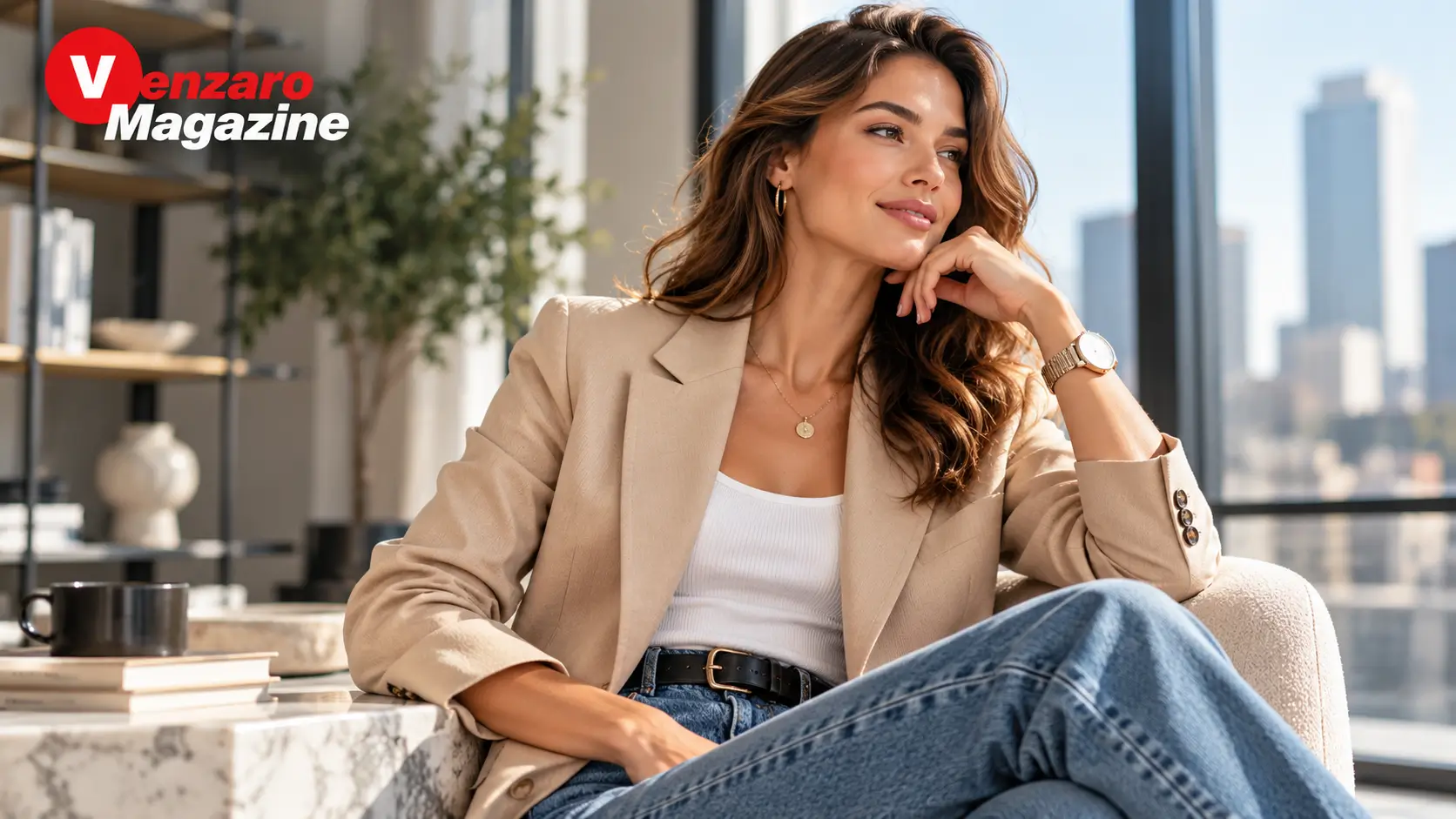
A blazer has a particular talent for making ordinary clothes look considered. A plain T-shirt and jeans can feel entirely different beneath a sharply cut jacket, while a soft, relaxed blazer can make tailored trousers appear less formal. That balance between structure and comfort helps explain the appeal of the garment, whatever name appears on its label.
Blazertje is the Dutch diminutive form of blazer, meaning roughly “little blazer.” Although the translation suggests a smaller jacket, the word does not automatically describe a cropped design, a particular fabric or a specific fashion trend. Dutch diminutives can convey familiarity or informality as well as physical size.
For shoppers encountering blazertje in an online listing, understanding this distinction is useful. The term might accompany a short fitted jacket, a relaxed linen style or a more traditional tailored piece. What matters is the garment itself: its proportions, construction, fabric and the clothes you intend to wear with it.
The interesting question, then, is not simply what a blazertje means. It is how to recognise a well-designed blazer, choose a shape that works with your wardrobe and style it without making every outfit feel like office attire.
What Does Blazertje Mean?
Blazertje comes from Dutch, where the familiar word blazer takes the diminutive ending -tje. In English, the closest literal translation is “little blazer.”
Diminutives are a normal part of Dutch grammar. They can indicate something physically smaller, but they can also make a description sound more familiar, affectionate or informal. Consequently, a person using blazertje does not necessarily mean that the jacket is miniature or even particularly short.
This distinction matters because clothing terminology can become confusing when words cross languages. An unfamiliar expression might sound like the name of a newly invented garment, especially when it appears in fashion articles or product descriptions.
In this case, the underlying item is familiar: a blazer. The Dutch form changes how the word sounds and may change its tone, but it does not establish a separate set of tailoring rules.
Is a Blazertje Different From a Regular Blazer?
Not in any universally defined technical sense.
A blazer can be fitted, boxy, cropped, oversized, structured or softly constructed. All these variations may be described using the Dutch diminutive, depending on the context.
A cropped blazer, by comparison, refers to a definite design feature: its shorter length. An oversized blazer describes a deliberately generous silhouette. A double-breasted blazer has a distinctive overlapping front closure.
Blazertje does not communicate those details with the same precision.
When interpreting a product description, it is therefore better to look for measurable characteristics rather than assume that the word guarantees a particular appearance.
Why Does the Term Appear in Fashion Searches?
Fashion terminology often travels beyond its original language through online shopping, editorial content and outfit inspiration. Readers who encounter an unfamiliar garment description may search for its meaning before deciding what to buy.
Blazertje is particularly easy to misunderstand because it resembles the familiar English word blazer while having a less familiar ending.
A shopper might reasonably wonder whether it refers to a European jacket style, a cropped design or a new fashion category. Understanding its Dutch origin answers that question without turning an ordinary clothing term into something more complicated than it is.
Understanding the Blazer’s Place in Modern Dressing
The blazer occupies an interesting position between formal tailoring and everyday clothing. It can borrow the shape of a suit jacket without requiring matching trousers, which makes it especially adaptable.
A traditional tailored design may have defined shoulders, lapels, a shaped waist and a relatively substantial fabric. A relaxed interpretation can preserve the recognisable outline while reducing padding, lining or internal structure.
Neither approach is inherently better. They simply create different effects.
A structured blazer introduces sharper lines and a more formal appearance. A softer jacket follows the body more naturally and can work particularly well with denim, casual trousers or knitted separates.
Understanding these differences is more valuable than relying on the impression created by a fashionable name.
How a Blazer Changes an Outfit
Much of a blazer’s visual effect comes from its outline. The shoulders establish the upper-body shape, while the lapels create lines leading towards the centre of the outfit. The hem determines where the jacket ends in relation to the waist and hips.
A short jacket can bring attention to the waistline, particularly when worn with high-rise trousers. A longer design can create a continuous vertical shape, especially when the layers underneath share similar colours.
Fabric also influences the result. A crisp woven material holds its shape, while a soft knit or fluid blend moves more freely.
Two blazers in the same colour can therefore look entirely different once worn. One might feel businesslike, while the other appears relaxed and understated.
Different Blazer Styles Worth Knowing
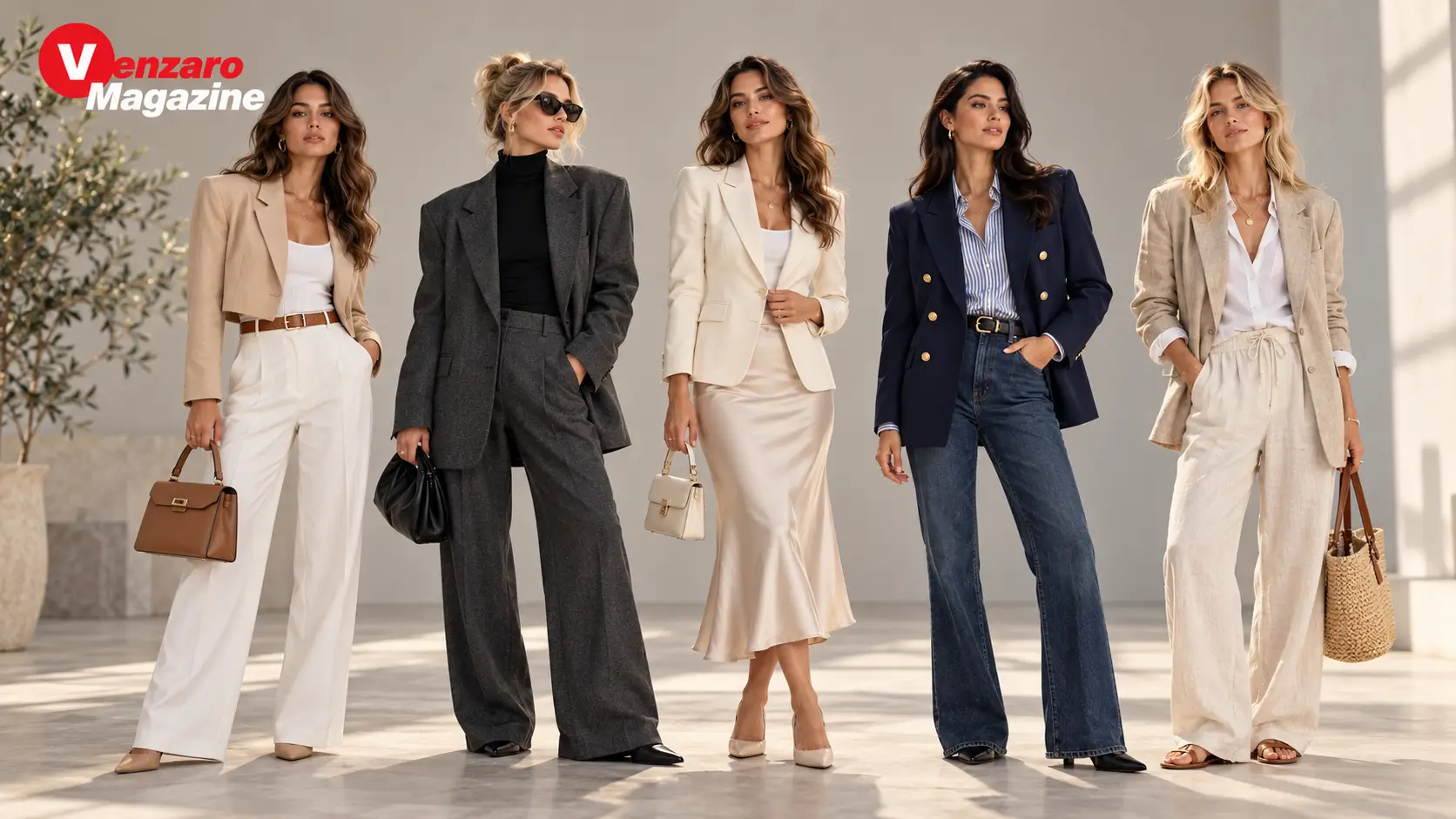
There is no single silhouette that defines every blazertje. Instead, several established blazer styles offer different ways to incorporate tailoring into everyday clothing.
Cropped Blazers for Defined Proportions
A cropped blazer ends higher on the torso than a conventional jacket. Depending on the design, it may finish near the natural waist or slightly below it.
This shorter length changes the balance of an outfit. Worn with high-waisted trousers, it can create a clear division between the upper and lower body. With a skirt, it may allow more of the garment’s waistband and shape to remain visible.
Cropped jackets can be structured or relaxed. Some feature strong shoulders and crisp lapels, while others use softer fabrics and minimal internal support.
When shopping, examine the actual garment length rather than assuming every blazertje is cropped. Also consider what happens when you raise your arms or sit down. A jacket that looks balanced while standing may feel restrictive if the hem or sleeves are unusually short.
Oversized Blazers for Relaxed Tailoring
An oversized blazer is designed to have more room through the body, often with broader shoulders and a longer length.
The key distinction is between a garment deliberately cut for a loose silhouette and a conventional jacket bought in a larger size. A properly designed oversized blazer may preserve the intended shoulder position and sleeve proportions while introducing extra volume elsewhere.
A jacket that is simply too large can look untidy because its construction no longer aligns with the wearer.
Oversized tailoring pairs naturally with narrower or straighter pieces underneath. Slim trousers, straight-leg jeans or a simple dress can provide contrast without requiring a tightly fitted outfit.
For a more relaxed appearance, wider trousers can also work, provided the overall proportions look intentional.
Fitted Blazers for a Sharper Appearance
A fitted blazer follows the outline of the torso more closely than a boxy or oversized design. It may include shaping through seams, darts or the side panels.
This style is useful when an outfit needs definition without excessive bulk. It can complement tailored trousers, pencil skirts and dresses, but it also works with denim when the goal is to create a polished contrast.
Fit should never be confused with tightness. A well-fitting jacket allows comfortable movement through the shoulders and upper back.
If the front pulls sharply around a button or the fabric forms strong horizontal wrinkles, the garment may be too narrow for its intended use.
Double-Breasted Blazers for Stronger Structure
Double-breasted blazers have overlapping front panels and two visible columns of buttons, although the number of functional buttons varies.
This arrangement creates a distinctive front shape and often makes the jacket feel more structured.
A double-breasted blazer can be worn as part of a coordinated outfit or used as the main statement in an otherwise simple look. A navy version with cream trousers, for example, offers a classic combination without depending on a matching suit.
Pay attention to the placement of the fastening buttons. They influence where the jacket defines the waist and how the front panels sit when closed.
Unstructured Blazers for Everyday Comfort
An unstructured blazer reduces some of the internal construction associated with traditional tailoring.
It may have little shoulder padding, a softer body and a partial lining or no lining at all.
The advantage is a less rigid appearance. The jacket can sit naturally over casual clothing and often feels less formal than a heavily structured alternative.
However, unstructured does not automatically mean lightweight. A soft wool jacket may still be relatively substantial, while a structured blazer made from a lighter cloth may be suitable for warmer conditions.
Always judge the fabric and construction together.
Choosing the Best Fabric for Your Blazer
Fabric determines much more than appearance. It influences the jacket’s comfort, drape, durability, warmth and care requirements.
A flattering cut in an unsuitable material may remain unworn, while a simple design in a comfortable fabric can become one of the most useful pieces in a wardrobe.
Linen for Warm-Weather Dressing
Linen has a relaxed texture and is often chosen for warmer weather. Its tendency to crease is part of its character rather than necessarily a sign of poor quality.
A linen blazer works particularly well with cotton trousers, simple dresses and lightweight separates.
For a summer outfit, consider a pale linen jacket over a breathable top with relaxed trousers or a long skirt. The overall appearance can feel polished without requiring heavy layering.
Check whether the jacket is fully lined. A substantial lining may affect how comfortable it feels in warm weather, even if the outer fabric is linen.
Cotton for Versatile Everyday Wear
Cotton blazers are available in a variety of weaves and weights. Some have a crisp, structured appearance, while others feel softer and more casual.
Cotton twill, for example, can provide enough body to hold a jacket’s shape while remaining suitable for everyday outfits.
A cotton blazer in navy, olive, stone or black can work with denim and casual trousers.
However, not every cotton fabric performs identically. Thickness, weave, finishing and lining all influence comfort and maintenance.
Wool and Wool Blends for Cooler Conditions
Wool can provide warmth while allowing designers to create both structured and fluid tailoring.
A fine wool blazer may drape smoothly, while a thicker textured wool can give an outfit a more substantial appearance.
Wool blends can also offer useful characteristics depending on the fibres involved.
For autumn and winter, a wool blazer works well over fine-knit jumpers, shirts and long-sleeved tops. It can also form part of a layered outfit beneath an overcoat, provided the coat has enough room.
Always check the care label, as wool garments may require more specialised cleaning than many cotton alternatives.
Polyester, Viscose and Blended Fabrics
Many contemporary blazers contain synthetic or regenerated fibres.
Polyester may be used for shape retention, durability or cost considerations. Viscose can contribute a softer, more fluid drape. Elastane may be added in small quantities to provide stretch.
The presence of a particular fibre does not determine quality by itself. Fabric construction, weight, finishing and tailoring all contribute to how the garment feels and performs.
Rather than judging a blazer solely by its fibre label, consider how it hangs, how the seams are finished and how comfortably it moves with your body.
How Should a Blazertje Fit?

A blazer that fits properly should feel comfortable in motion as well as look balanced in a mirror.
Because different styles are designed with different amounts of ease, there is no single ideal measurement for every jacket. Nevertheless, several checks can help distinguish intentional styling from poor fit.
Start With the Shoulders
The shoulder area is one of the most important places to assess because altering it can be difficult and expensive.
In a conventionally fitted blazer, the shoulder seam generally sits close to the natural edge of the shoulder.
An oversized design may deliberately extend beyond that point, while a softer unstructured jacket may have a less defined shoulder line.
The question is whether the shape appears intentional and moves comfortably, not whether every jacket follows one fixed rule.
Check the Chest and Button Position
If the blazer is designed to close, fasten it and examine how the front panels sit.
The fabric should not pull excessively across the chest or produce pronounced tension around the button.
A little movement in the fabric is normal, but strong pulling may indicate that the jacket is too narrow.
Also remember that a blazer intended to be worn open can fit differently from one designed for regular fastening. The product’s intended silhouette should guide the assessment.
Examine Sleeve Length and Movement
Conventional blazer sleeves commonly finish around the wrist, although cropped and fashion-led designs may be intentionally shorter.
Make sure the sleeves allow you to bend your arms without uncomfortable resistance.
Lift your arms slightly, reach forward and sit down. If the jacket rides up dramatically or feels tight across the upper back, the cut may not suit your movement.
A blazer should work with your daily activities rather than require you to remain in one carefully arranged pose.
Consider the Length Against Your Outfit
The hem of a jacket changes the proportions of whatever you wear beneath it.
Shorter blazers often reveal more of the waistline. Longer versions create more coverage and can complement fitted layers.
Neither is universally more flattering.
A practical approach is to try the jacket with the trousers, skirts or dresses you actually wear. Assess the whole outfit rather than deciding on the blazer in isolation.
How to Style a Blazertje With Everyday Clothes
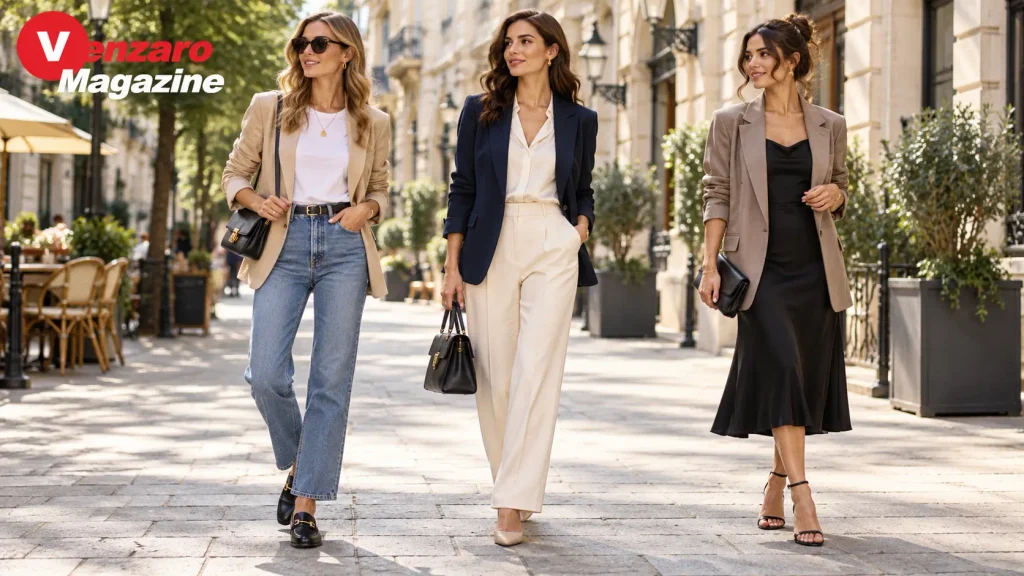
Styling a blazer is largely about controlling the contrast between tailored and casual elements.
The jacket already contributes a degree of structure. The remaining pieces determine whether the finished outfit feels professional, relaxed, minimal or expressive.
With Jeans and a Plain T-Shirt
One of the simplest combinations is a blazer worn over a plain T-shirt with straight-leg jeans.
The contrast is easy to understand: the jacket adds structure, while the denim and T-shirt keep the outfit informal.
A black blazer over a white tee and blue denim provides a classic starting point. Loafers can make the combination feel smarter, while trainers create a more casual finish.
For a softer palette, try a beige or stone-coloured blazer with an off-white top and dark denim.
The outfit does not require elaborate accessories. A practical shoulder bag or simple jewellery may be enough.
With Tailored Trousers for Work
A blazer and tailored trousers can create a professional look without needing to form a complete matching suit.
Try combining different but complementary colours, such as a navy jacket with grey trousers or a charcoal blazer with a cream blouse.
A fine-knit top can make the look less formal than a conventional shirt, while a crisp button-down can increase the sense of structure.
For workplaces with a smart-casual dress code, comfortable loafers or understated flats may provide a useful finishing touch.
The important consideration is the actual dress standard of the workplace. A relaxed blazer outfit may be appropriate in one environment but too casual in another.
With a Dress for Softer Contrast
A blazer worn over a dress combines two different silhouettes.
A cropped jacket can leave much of the dress visible, while a longer design can create a layered effect.
For example, a simple midi dress beneath a relaxed blazer offers a balanced outfit for an informal dinner or daytime event.
If the dress is patterned, a plain blazer can help keep the overall appearance cohesive. If the dress is simple, a jacket with a distinctive texture can introduce interest.
Try the outfit both open and fastened, since the jacket’s closure can change the visible shape of the dress.
With a Skirt for Balanced Proportions
Blazers can work with mini, midi and longer skirts.
A fitted blazer paired with a flowing skirt creates contrast between a defined upper body and a softer lower silhouette.
A boxy jacket worn with a straight skirt produces a different effect, particularly when the materials have similar visual weight.
Pay attention to where the jacket ends relative to the skirt’s waistband and widest point.
There is no universal proportion that everyone must follow. The goal is to find an arrangement that feels comfortable and visually intentional.
With Wide-Leg Trousers for Relaxed Elegance
Wide-leg trousers and a blazer can create a fluid, coordinated outfit.
A shorter jacket leaves the trouser waistband visible, while a longer one creates an elongated silhouette.
For a restrained appearance, choose related tones rather than sharply contrasting colours. A taupe blazer with cream trousers, for instance, creates a gentle transition between the pieces.
A simple fitted top underneath can provide enough definition to balance the volume of the trousers.
Building Outfits Around Colour
Colour can make a blazer feel either like a versatile wardrobe foundation or a statement piece.
Neutral shades are often useful because they combine with a wide range of existing clothing. However, the most practical colour is ultimately the one that works with what you already own.
Black: Simple and Adaptable
A black blazer is suitable for many smart-casual and more formal combinations.
It pairs with denim, white shirts, monochrome outfits and contrasting colours.
Black can also create a strong visual outline, making the cut of the jacket particularly noticeable.
If you prefer softer combinations, wearing black with cream, grey or muted colours can reduce the contrast.
Navy: A Classic Alternative
Navy offers many of the same styling opportunities as black while introducing a slightly different visual character.
It works well with grey, white, tan, burgundy and several shades of denim.
A navy blazer can be an especially practical choice for someone whose wardrobe already contains neutral trousers and simple shirts.
Beige and Cream: Light, Understated Styling
Beige, ivory and cream blazers lend themselves to tonal outfits.
They can be combined with white, brown, stone, olive and muted blue.
For a coordinated look, use similar shades with different textures. A smooth jacket over a ribbed knit, for example, introduces variation without needing bold colour contrast.
Lighter fabrics may show marks more readily, so care requirements are worth considering before purchase.
Bold Colours and Patterns
A blazer in red, green, cobalt or another strong colour can become the focal point of an outfit.
When the jacket is visually dominant, simpler supporting pieces can make styling easier.
Patterns such as checks and stripes offer another option. A checked blazer with plain trousers allows the pattern to remain noticeable without competing with several other printed garments.
There is no need to avoid combining patterns entirely, but doing so successfully usually requires attention to scale, colour and contrast.
Dressing a Blazer for Different Seasons
The same blazer will not necessarily suit every season. Fabric weight, lining, climate and layering all affect comfort.
Spring
Spring dressing often involves changeable temperatures, making a blazer useful as a removable outer layer.
A cotton or lightly lined jacket can be combined with a long-sleeved top, jeans and comfortable shoes.
For cooler mornings, a lightweight knit may provide additional warmth without making the outfit excessively bulky.
Summer
During warmer weather, comfort becomes particularly important.
Linen and suitable lightweight cotton fabrics can be practical choices, especially when the jacket has a breathable construction.
A pale blazer worn over a sleeveless top or simple dress can provide a smart appearance for occasions when a T-shirt alone feels too casual.
The fabric composition, lining and fit matter more than whether the garment is marketed as a summer blazer.
Autumn
Autumn offers opportunities for more textured materials and layered outfits.
A wool-blend blazer can work over a fine-knit jumper with dark denim or tailored trousers.
Earth tones such as olive, brown and charcoal can be combined with existing neutrals without requiring a completely separate seasonal wardrobe.
Winter
A blazer can function as an intermediate layer beneath an overcoat.
For this combination, the blazer should not be so bulky that the coat becomes uncomfortable across the shoulders and arms.
A fine-knit base layer, wool blazer and suitable outer coat can provide a structured appearance while allowing each piece to serve a different purpose.
For particularly cold conditions, the outerwear needs to provide adequate protection; a fashion blazer alone should not be expected to replace a warm coat.
How to Choose a Blazer That You Will Actually Wear
A blazer may look appealing in product photographs but still be a poor purchase if it does not suit your lifestyle.
The best approach is to begin with your existing wardrobe rather than with a trend.
Identify the Occasion You Need It For
Consider where the jacket will be worn most often.
Someone who needs office clothing may value a neutral, well-structured blazer that works with several pairs of trousers.
Someone looking for weekend outfits may prefer softer tailoring that sits comfortably over T-shirts and casual knitwear.
For occasional events, a more distinctive design may be reasonable, provided it also works with other pieces in the wardrobe.
Being specific about its intended use helps prevent purchases that are attractive but impractical.
Check the Measurements, Not Just the Size
Clothing sizes vary between brands and individual designs.
A size label alone cannot tell you whether the shoulders, sleeves and body length will suit you.
When shopping online, look for garment measurements, a size guide and details about how the jacket is intended to fit.
If a retailer provides a model’s height and the size worn, this may offer useful context, although the jacket’s actual measurements remain more informative.
For oversized clothing, check whether the generous proportions are part of the original design before considering a different size.
Inspect Construction Details
Construction quality can be assessed through several visible details.
Look at the stitching around the lapels, cuffs and pockets. Examine whether the lining lies smoothly and whether the fabric pulls awkwardly near the seams.
Buttons should feel securely attached, and functional closures should fasten without unnecessary tension.
For patterned jackets, examine how checks or stripes meet at prominent seams. Perfect matching is not always possible or necessary, but obvious misalignment may affect the finished appearance.
A higher price does not automatically guarantee better construction. These details provide a more useful basis for comparison.
Understand the Return Policy
Online purchases introduce uncertainty because photographs cannot fully communicate fabric texture, movement or personal fit.
Before ordering, check the retailer’s return conditions, time limits and any applicable return costs.
Also confirm the fabric composition and care instructions. A jacket requiring specialised cleaning may be less practical than a washable alternative, depending on how frequently you intend to wear it.
Common Mistakes When Buying or Styling a Blazer
Even a well-designed jacket can be disappointing when chosen for the wrong reasons.
One common mistake is purchasing a blazer because it is described as fashionable without considering its proportions. A dramatic oversized design may look appealing in an editorial image but may not work comfortably beneath an existing coat.
Another is selecting a fabric based only on appearance. A heavy, fully lined jacket might be unsuitable for regular summer use, while a very lightweight unstructured design may not provide the appearance someone wants for formal workwear.
Buying the wrong size to achieve an oversized effect can also cause problems. Additional width does not necessarily create the balanced shape of intentionally relaxed tailoring.
Finally, some shoppers concentrate on the blazer while ignoring the rest of their wardrobe. A jacket becomes much more practical when it can be worn with several existing outfits rather than requiring new trousers, tops and shoes.
Caring for a Blazer Without Damaging Its Shape
Blazers often need more careful handling than basic casual clothing because their shape depends on seams, interfacing, linings and, in some designs, structured shoulders.
Always start with the manufacturer’s care label.
Hanging and Storage
Use a hanger that supports the shoulders rather than a thin wire hanger that may distort the garment over time.
Allow enough space between garments to prevent excessive compression.
For longer storage periods, make sure the jacket is clean and dry before putting it away. A breathable garment cover may help protect clothing from dust while allowing some air circulation.
Dealing With Creases
Some blazer fabrics can be refreshed with steam, but heat and moisture should be used carefully.
Test a discreet area first and follow the garment’s care instructions.
Direct ironing may flatten textured fabric or leave unwanted shine, particularly on certain wool and synthetic materials. A pressing cloth and suitable temperature may reduce that risk when ironing is permitted.
Cleaning and Maintenance
Frequent washing is not always appropriate for structured jackets.
Minor surface dust can often be removed with a suitable clothes brush, while small marks may require fabric-specific treatment.
Avoid soaking or machine-washing a jacket unless its care label explicitly allows it.
Paying attention to loose buttons, damaged seams and worn lining areas can also help prevent small problems from becoming more difficult repairs.
Is a Blazertje Worth Adding to Your Wardrobe?
The usefulness of a blazer depends less on its name than on how naturally it fits into your clothes and routine.
A carefully chosen jacket can extend the range of existing pieces. Casual jeans may become appropriate for a smarter occasion, while a simple dress can take on a different appearance when paired with tailoring.
Nevertheless, owning a blazer is not essential for everyone. If your daily activities rarely call for one, or you strongly prefer other types of outerwear, the purchase may offer limited value.
A helpful way to decide is to imagine at least three outfits using clothing you already own. If the jacket works comfortably with those combinations and suits occasions you regularly encounter, it is more likely to become a useful addition.
Cost also deserves attention. A less expensive blazer worn regularly may offer better practical value than an elaborate design that remains in the wardrobe.
Comfort, versatility, care requirements and durability should all play a part in the decision.
Frequently Asked Questions
Is blazertje a Dutch word?
Yes. Blazertje is the Dutch diminutive form of blazer. Its literal English meaning is approximately “little blazer,” although the diminutive does not always indicate a physically smaller garment.
Does blazertje mean cropped blazer?
No. A cropped blazer has a deliberately shortened body length. Blazertje does not specify a particular hemline, so it can be used in contexts involving different blazer styles.
Can a blazertje be oversized?
Yes. The Dutch diminutive does not prevent the garment from having an oversized silhouette. The word’s exact interpretation depends on the context in which it is used.
Is blazertje a particular clothing brand?
The word itself is a Dutch clothing term rather than the name of one identifiable manufacturer. A company or website may also use the expression commercially, but the term alone does not identify a particular brand.
What shoes work with a casual blazer?
Loafers, trainers, ankle boots and simple flats can all complement a casual blazer. The appropriate choice depends on the trousers or skirt, the occasion and the overall level of formality.
What is the easiest blazer colour to style?
Black, navy, grey and beige are versatile options, but the easiest colour depends on your existing wardrobe. Choose a shade that coordinates with several tops and bottoms you already wear.
Can you wear a blazer with jeans?
Yes. Jeans and a blazer offer a familiar contrast between casual denim and tailored clothing. Straight-leg jeans with a plain top provide a simple foundation that can be dressed up or down through footwear and accessories.
Final Thoughts
Blazertje may sound unfamiliar to English-speaking shoppers, but its meaning is straightforward. It is a Dutch diminutive of blazer, not a fixed new category of outerwear. The word can appear alongside different cuts, fabrics and silhouettes, so the details of the individual jacket matter far more than the label.
For anyone considering a blazer, the most useful questions concern fit, construction, comfort and compatibility with existing clothing. A jacket that moves comfortably, suits the intended occasion and works with several outfits offers more lasting value than one chosen because of an unfamiliar fashion term.
The appeal of a good blazer is ultimately its flexibility. It can make casual clothing feel considered, soften the formality of tailored separates or provide a finishing layer for an otherwise simple outfit. Understanding the garment beyond its name makes choosing and wearing one much easier.
MORE READ: NippyBox: What It Was, What Happened, Current Status, Safety and Alternatives