





Garage door installation in Brisbane can blow out when a door needs to be made to size, or materials take longer to arrive. Site conditions add another variable, and so can Brisbane’s weather or an older home that needs extra measuring to get the door fitted correctly.
Doors Direct has seen these delays play out on real installation jobs, and we created this guide to help you avoid unnecessary hold-ups. You’ll learn where delays happen, how long installation should take, and how to avoid running into the same issues when booking your own.
Let’s start with one of the most common causes: custom sizing and stock delays.
Custom Sizing and Stock Delays Push Out Install Dates

A standard garage door is usually easier to schedule when the size and specifications match an available option. Once you’ve chosen the door, it can be ordered and an installation date arranged without additional work.
Custom sizing adds another step. Your installer needs to measure the garage opening carefully and confirm the door specifications before ordering it. Sectional doors can be made up to 3m high and 6.4m wide, so an unusual structural opening can’t always be treated as a standard fit. Older homes can need additional measuring or adjustments too.
Then there’s the wait for the door and its components to arrive from the supplier. A less common size, finish, or configuration often takes longer to source than a standard option. That’s why the installation itself isn’t usually the part that takes days.
Once everything is ready, the actual fitting can take around three to four hours. The longer timeline often comes from the measuring, ordering, and waiting that happen beforehand.
Brisbane’s Weather and Older Homes Add Extra Steps
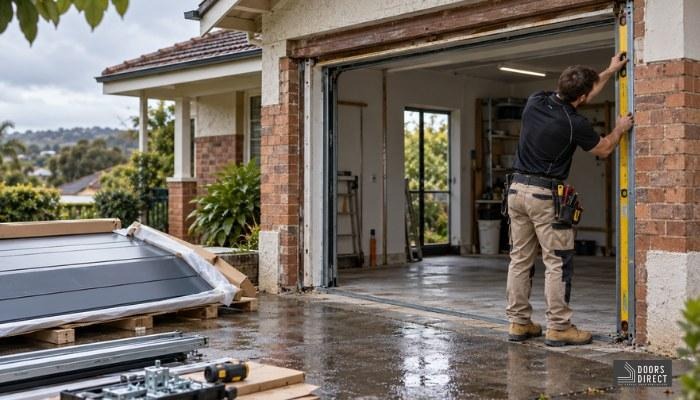
Queensland’s storm season runs from November to April. During this time, outdoor installation work becomes harder to schedule. Heavy rain interrupts work, while high humidity makes some fitting and sealing work less practical. A few days of poor weather can push an installation date back, especially when several jobs are already booked around the same period.
And if you have an older home, the garage itself adds another complication. Over the years, the opening can shift or settle, leaving it less square or level than it was when the garage was first built.
The new door then needs to be fitted to the opening as it exists today, which means extra adjustments during installation. That extra work takes time, particularly when the garage has had years of wear or previous repairs.
That doesn’t mean your garage needs major work. It simply means the installation needs to account for the condition of the existing opening and door.
Council Approvals or Site Access Can Slow Things Down
One of the most overlooked obstacles we see when planning a garage door installation is approval requirements. Many homeowners don’t realise that approval can come into the picture when the garage itself is being built or changed.
You don’t generally need to treat a standard garage door replacement like building a new garage. But if you’re building a new garage, extending it or changing the existing structure, approval requirements can apply. In Brisbane, for example, building a garage on a property with an existing house requires building approval. Planning approval can also depend on the property and whether the proposal meets Brisbane City Plan requirements.
The rules vary depending on the work and the property, so check with your local council or building certifier before you book the installation. That way, you won’t reach installation day only to find the required approval isn’t in place.
If approval is still needed, the work has to wait until you’ve completed the necessary process, which can push your installation date back.
Don’t forget about site access either. A steep driveway, narrow access, or limited space for delivery vehicles can make it harder to get the new door and equipment to the garage. That needs to be worked out before installation day, or you will end up with another delay.
How Long Should a Garage Door Installation Actually Take
As we already mentioned, a standard garage door installation usually takes around three to four hours once the crew arrives on-site. But the job can take longer depending on the door, the condition of the garage, and any extra work involved.
For example, if you have a standard roller or sectional door with a suitable opening and clear access, the installation will usually stay within that timeframe. However, a larger or more complex door, an opening that needs adjustment, or additional electrical or structural work can add time to the job.
So if you’ve been told your installation will take several days of on-site work, it’s worth asking what’s involved. The door itself usually isn’t being fitted continuously for that entire period. There may be other work, waiting time, or site issues behind the longer schedule.
Signs Your Installation Delay Isn’t Normal
A short wait with clear updates is one thing. A long wait with no information is another. If your installation is taking longer than expected, a few signs suggest you need to follow up.
- No Updates for Weeks: If you haven’t heard anything about your installation for weeks, don’t assume someone is still working on it behind the scenes. You should receive an update, even when the door or another part of the job is still being arranged.
- No Explanation for the Delay: A delay should be accompanied by a reason. It might be a manufacturing delay, bad weather, a site issue, or something else affecting the job. If you’re only told that the installation is being pushed back without any explanation, ask what’s holding it up.
- No New Installation Date: Once your original installation date has passed, you should receive a new timeframe. Being left without a revised date makes it difficult to know when to expect the work or plan around it.
These are clear signs that it’s time to ask for an update, a reason for the delay, and a new installation date. You should come away knowing what’s holding up the job and when it is expected to go ahead. A vague answer or another indefinite wait means it’s time to press for something more specific.
How to Avoid Delays When Booking Your Install
Booking early and asking the right questions upfront can help prevent avoidable delays. These checks can give you a clearer idea of the cost, lead time, and installation date:
- Book an On-site Quote Early: An on-site quote gives the installer a chance to measure the opening and check the garage before anything is ordered. You’ll have a clearer idea of what the installation requires and whether any extra work needs to be planned.
- Ask About Lead Times Upfront: You should get an estimated delivery and installation timeframe before you book. That way, you’ll know when to expect the door and can plan around the installation.
- Confirm What’s Included: Ask whether the quoted price and timeframe include any electrical, structural, or preparation work your garage needs. Finding out about extra work before installation day gives you a more realistic idea of the total timeline.
Once you’ve confirmed the quote, lead time, and what’s included, you’ll have a much clearer idea of what to expect on installation day. That means fewer surprises and a better idea of when your new door will actually be ready to use.
Getting Your Garage Door Installed Without the Wait
In the end, avoiding installation delays comes down to planning ahead. Get an on-site quote early, ask about lead times, and make sure any access, preparation, or approval requirements are sorted ahead of the installation date.
And if you want an installer who gives you a clear timeframe and explains what to expect before the work begins, Doors Direct can help. Get in touch to arrange an on-site quote and discuss your installation.
Frequently Asked Questions
Every garage door installation is different, and you may still have a few questions before booking. Here are some common questions homeowners ask about installation, repairs, and getting started.
Does a garage door repair take as long as a full installation?
No. Many garage door repairs are quicker because they don’t involve ordering and fitting a new door. The time depends on the fault and the repair required.
Can I install a garage door myself instead of hiring a professional?
DIY installation isn’t recommended for most homeowners. Garage doors are heavy, and their spring systems can store considerable tension. So professional installation reduces the risks involved and ensures the door is fitted correctly.
Is a free quote the same as a booking?
No. A free on-site quote lets you discuss the door, check the opening and get pricing before you commit to the installation. You can then decide whether to proceed.
Should I replace an old door instead of repairing it?
It depends on the condition of the door and the repair required. Repeated faults, poor operation or difficulty sourcing replacement parts can be signs that replacement is worth discussing with your installer.