
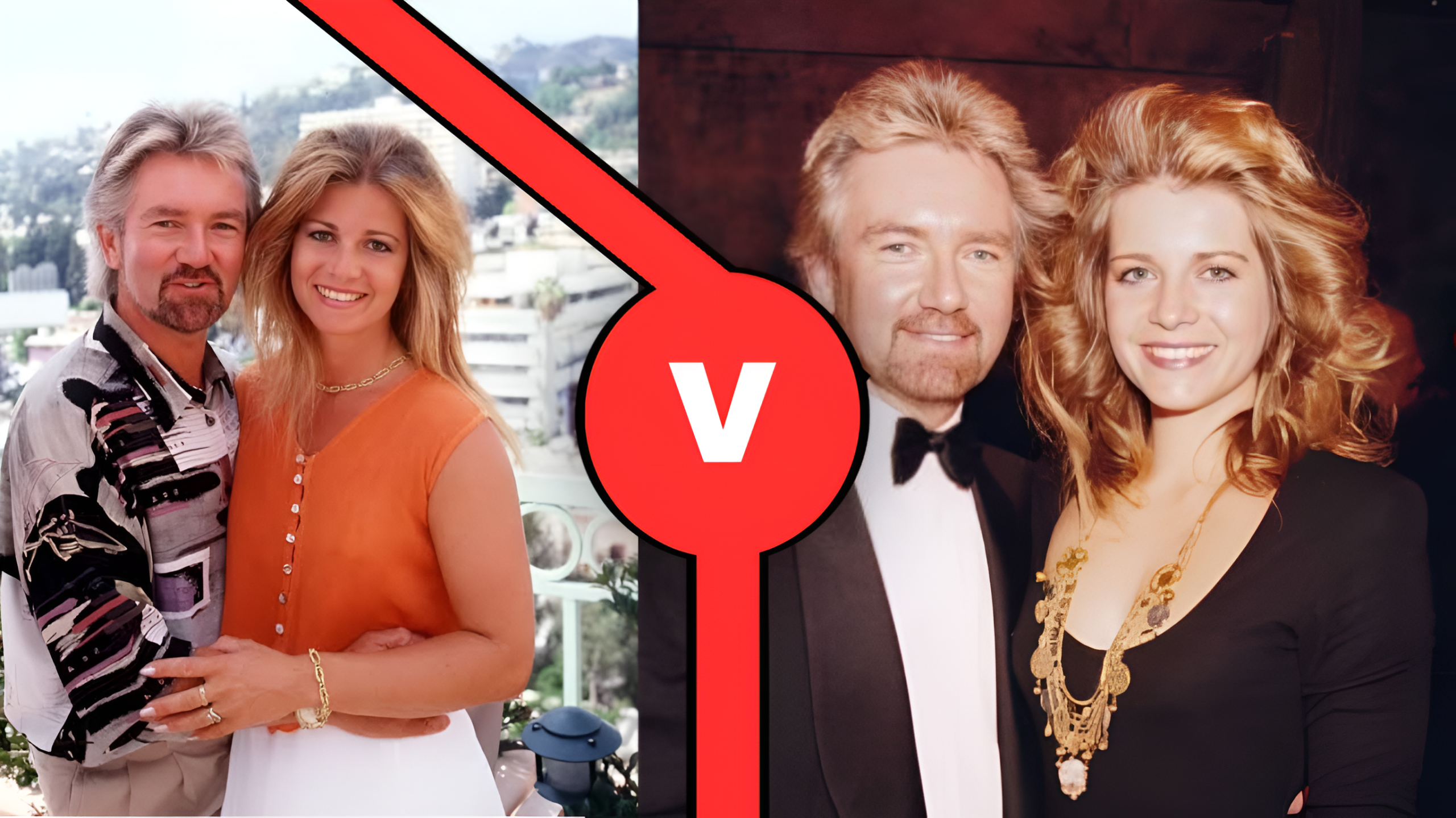









When people first come across the name Wil Bakula, the connection to Hollywood is almost unavoidable. His father, Scott Bakula, became one of television’s recognizable leading actors through roles in Quantum Leap, Star Trek: Enterprise, and NCIS: New Orleans. His mother, Chelsea Field, also built a long career as an actress.
But Wil Bakula’s story becomes more interesting when the famous surname is taken out of the picture.
Rather than following his parents into acting, Wil developed his own creative identity through music. His public work connects him with songwriting, keyboards, synthesizers, production, and independent music projects. Most notably, he is the producer and instrumentalist behind Foamboy, the Portland-based pop duo he formed with vocalist Katy Ohsiek.
That distinction matters. Wil is not simply interesting because he was born into a well-known entertainment family. His music career provides a separate reason to know his name.
From his earlier work with the experimental collective Chromatic Colors to Foamboy’s increasingly distinctive blend of dance-pop, electronic textures, funk, disco and jazz influences, Wil’s path shows how someone raised around professional entertainers can still choose a creative identity of his own.
Wil Bakula at a Glance
| Detail | Information |
|---|---|
| Full name | Wil Botfield Bakula |
| Known as | Wil Bakula |
| Born | December 1, 1995 |
| Birthplace | Los Angeles, California, United States |
| Age | 30 years old in 2026 |
| Father | Scott Bakula |
| Mother | Chelsea Field |
| Profession | Musician, producer, songwriter and instrumentalist |
| Best known music project | Foamboy |
| Musical collaborator | Katy Ohsiek |
| Earlier project | Chromatic Colors |
| Main instruments associated with his work | Keys, piano and synthesizer |
| Musical base | Portland, Oregon |
| Public profile | Relatively private |
Some details about Wil’s private life are not extensively documented, which is worth remembering when reading online biographies about him. His music, however, has a much clearer public record.
Who Is Wil Bakula?
Wil Bakula is an American musician and producer whose public identity is increasingly connected with independent music rather than Hollywood acting.
He was born into a family that was already connected to the entertainment industry. His father, Scott Bakula, had an established acting career, while his mother, Chelsea Field, was also an actress. Yet Wil did not simply reproduce that career path.
Music became his own medium.
His work demonstrates an interest in the parts of music that happen beyond the microphone. He has been involved in production, composition, arrangement and instrumental performance, particularly through his collaborations with singer Katy Ohsiek.
That is one reason Foamboy is so important when understanding Wil Bakula. It gives people something more substantial than a family connection to examine.
Instead of asking only, “Who is Scott Bakula’s son?”, a more revealing question is:
What has Wil Bakula actually created for himself?
The answer leads directly into Portland’s independent music scene.
How Old Is Wil Bakula?
Wil Bakula was born on December 1, 1995, in Los Angeles, California. That makes him 30 years old in 2026, with his 31st birthday coming in December.
His full name has been publicly listed as Wil Botfield Bakula, although he is generally known simply as Wil Bakula.
Because celebrity-family websites sometimes publish conflicting birth years, ages or family details, it is useful to distinguish between information supported by stronger biographical records and information repeated from one entertainment site to another.
His December 1, 1995 birth date is documented in biographical information associated with his mother, Chelsea Field.
His age is interesting mainly as context. Wil belongs to a generation that grew up while his father’s television career was already established, but his own professional identity emerged in a very different entertainment environment—one shaped heavily by independent music, streaming platforms, DIY production and online communities.
That difference helps explain why his career does not resemble a traditional Hollywood trajectory.
Who Are Wil Bakula’s Parents?
Wil Bakula is the son of Scott Bakula and Chelsea Field.
His father is widely recognized for playing Dr. Sam Beckett in Quantum Leap, Captain Jonathan Archer in Star Trek: Enterprise, and Dwayne Pride in NCIS: New Orleans. Scott Bakula’s career also includes extensive stage and television work.
His mother, Chelsea Field, has likewise worked extensively in film and television.
Growing up with two professional actors naturally placed Wil close to the entertainment world. However, being surrounded by acting did not necessarily mean that acting would become his chosen profession.
In Wil’s case, music appears to have provided a different route into the creative world.
That is an important distinction.
He did not completely reject entertainment. Instead, he found another role within it.
Wil Bakula and His Famous Father, Scott Bakula
Much of the public curiosity surrounding Wil comes from his father.
Scott Bakula’s career became particularly prominent during the late 1980s and 1990s. His role as Dr. Sam Beckett in Quantum Leap established him as a major television performer, and he later became part of the Star Trek universe as Captain Jonathan Archer.
For another actor’s child, that kind of family background could create an obvious path into acting.
Wil chose something different.
His career demonstrates that having a famous parent does not necessarily determine the form a person’s creativity will take. Instead of becoming known primarily for television appearances, he developed skills behind the music itself.
In fact, the contrast between father and son is one of the most interesting parts of Wil Bakula’s story.
Scott became known for inhabiting characters.
Wil became known within his own creative circle for helping build sounds.
One worked primarily through performance on screen and stage. The other works through production, composition and musical collaboration.
That does not mean the two careers have nothing in common. Both are creative professions requiring discipline, interpretation and an ability to communicate emotion.
The difference is simply the medium.
Did Wil Bakula Become an Actor?
There is no strong public record showing Wil Bakula building a major acting career comparable to his parents.
Instead, the public evidence around his professional life points toward music.
This is worth emphasizing because celebrity-family searches often produce assumptions. Someone who is the child of two actors is easily described as an “actor’s son,” even when that label tells readers very little about what the person actually does.
For Wil, the more meaningful professional description is musician and producer.
His work with Foamboy and the earlier Chromatic Colors project provides considerably more evidence about his career than speculation about whether he intended to become an actor.
Wil Bakula’s Journey Into Music
Wil’s music career did not appear overnight.
One of the most important chapters came through Chromatic Colors, a collaborative music project involving Wil Bakula and vocalist Katy Ohsiek.
The project gave the pair space to experiment with different styles rather than immediately locking themselves into one recognizable genre.
Publicly available recordings from Chromatic Colors show a broad musical range. The project moved through electronic, funk, jazz, indie, psychedelic and experimental territory.
That variety is important because it helps explain the musical foundation that eventually became Foamboy.
Wil was not starting from a conventional pop formula.
He was already interested in combining sounds, working with other musicians and treating production as part of the creative process.
The result was a musical education built around experimentation.
What Was Chromatic Colors?
Chromatic Colors was an Oregon-based experimental collective associated with Wil Bakula and Katy Ohsiek.
The project involved a wider group of musicians and explored a variety of sounds. Wil’s contributions included instruments and production, while Ohsiek provided vocals.
The project’s recordings demonstrate how much freedom Wil and his collaborators allowed themselves during this stage.
Rather than treating genre as a strict boundary, they experimented with different combinations of electronic music, funk, jazz, indie rock and other influences.
That approach later became important to Foamboy.
The transition from Chromatic Colors to Foamboy was not a complete musical reset. It was more like refinement.
The early project allowed Wil and Katy to discover what kinds of sounds, arrangements and songwriting approaches worked particularly well together.
Eventually, the two reduced the size of the project and developed a more focused musical identity.
That identity became Foamboy.
Wil Bakula and Foamboy
If there is one project that best represents Wil Bakula’s career today, it is Foamboy.
Foamboy is a Portland-based duo consisting of producer and instrumentalist Wil Bakula and vocalist Katy Ohsiek.
The two have been collaborating musically since 2016.
Their partnership is especially interesting because their roles complement each other. Katy’s vocals and lyrical perspective provide the emotional and narrative center, while Wil’s production and instrumentation help create the musical environment surrounding those ideas.
Foamboy describes its sound as jazz-inspired, danceable pop with a highly personal lyrical edge.
That description captures something important about the project: the music can be energetic and dance-oriented without being emotionally lightweight.
The songs frequently place vulnerable or complicated subjects inside arrangements influenced by disco, funk, electronic music and pop.
That contrast has become part of Foamboy’s identity.
What Kind of Music Does Foamboy Make?
Foamboy’s music is difficult to place into one narrow genre.
There are recognizable elements of pop, disco, funk, electronic music, R&B and jazz. At times, the music can feel dreamy and spacious; at other moments, it becomes more rhythmically driven.
Wil’s role is particularly important in creating that sonic flexibility.
As a producer and instrumentalist, he works with keyboards, piano and synthesizers while shaping the overall arrangement and sound of the recordings.
The result is music that can be immediately approachable without being completely predictable.
That balance has helped Foamboy attract attention within the Portland independent music community.
My Sober Daydream: Foamboy’s First Album
Foamboy released its debut album, My Sober Daydream, in 2021.
The album represented the next stage of Wil Bakula and Katy Ohsiek’s collaboration after their years of experimentation.
Its sound combines danceable rhythms with more personal songwriting, creating a contrast between the music’s movement and the emotional subjects explored in the lyrics.
The album also received attention from outlets including KCRW, Consequence of Sound and Week in Pop.
One of its notable tracks is “Better.”
KCRW highlighted the song as an example of Foamboy’s ability to place difficult emotional themes over a groove-driven musical foundation. The song deals with subjects including seasonal depression, mental health and capitalism, yet its musical presentation remains energetic.
That combination says a lot about the creative approach behind Foamboy.
The music does not necessarily become gloomy simply because the subject is difficult.
Instead, Wil and Katy create a space where uncomfortable emotions can coexist with movement and rhythm.
The Importance of “Better”
“Better” is particularly useful when examining Wil Bakula’s role as a producer.
A song can communicate its message through lyrics, but production determines much of the emotional environment in which those lyrics are heard.
In “Better,” the upbeat, disco-influenced foundation creates an unusual contrast with the subject matter.
The result is neither a conventional sad song nor a simple dance track.
It occupies the space between the two.
That creative tension appears repeatedly in Foamboy’s work and helps explain why the project has attracted attention from independent music publications and radio platforms.
Eating Me Alive and a More Mature Sound
Foamboy’s second album, Eating Me Alive, arrived in 2024.
The record marked a deeper development in the project’s sound.
Compared with the group’s first album, Eating Me Alive explores darker emotional territory while retaining the band’s interest in danceable rhythms, electronic textures and layered instrumentation.
The album’s credits offer a particularly useful look at Wil’s role.
He is credited with production and with keys, piano and synthesizer. The record also involved additional musicians playing bass, drums, guitar, trumpet and percussion.
That matters because it shows that Wil’s work is not simply about creating electronic tracks alone.
His production exists at the intersection of programmed and live musical elements.
The album was released in March 2024, and the group subsequently performed across the West Coast.
What Makes Wil Bakula’s Production Style Interesting?
One of the more interesting things about Wil Bakula’s work is the relationship between experimentation and editing.
In an interview with Willamette Week, Wil discussed how his earlier work with Katy involved a much broader approach to genre. They could move from jazz to pop, Latin music, indie and rock.
Over time, however, the pair became more selective.
That development is significant.
Creative maturity is not always about adding more ideas. Sometimes it is about knowing which ideas should be removed.
For a producer, that judgment can be just as important as technical ability.
Wil’s evolution from the broader experimentation of Chromatic Colors toward the more focused identity of Foamboy suggests that his production philosophy developed alongside the music itself.
Wil Bakula’s Instruments and Musical Skills
Wil Bakula is associated with several instruments and production roles.
His work with Foamboy specifically credits him with:
- Keys
- Piano
- Synthesizer
- Production
- Songwriting and composition
His earlier Chromatic Colors credits also show him contributing instruments, mixing and production.
This combination gives him a broader role than simply being a keyboard player.
A producer has to think about the entire recording.
That can include arrangement, instrumentation, transitions, sound selection, recording decisions and the relationship between individual tracks.
In Foamboy, Wil appears to operate in exactly that space.
His contribution is part of the structure holding the songs together.
Wil Bakula’s Relationship With Katy Ohsiek
Katy Ohsiek is one of the most important people in Wil Bakula’s professional story.
Their musical collaboration began years before Foamboy officially emerged.
The two worked together through Chromatic Colors before developing their duo project.
Their partnership is interesting because it appears to have evolved rather than being created as a ready-made commercial formula.
They experimented together, learned what worked, and eventually narrowed their creative direction.
Ohsiek’s vocals and lyrics give Foamboy its highly personal emotional perspective, while Wil’s production provides much of the instrumental architecture.
That division is not rigid, however.
The album credits show both artists involved in songwriting.
This makes Foamboy better understood as a creative partnership rather than simply a singer working with a producer.
Wil Bakula and the Portland Music Scene
Portland plays an important role in understanding Wil Bakula’s adult career.
Although he was born in Los Angeles and grew up connected to a famous entertainment family, his professional music identity became associated with the Portland independent scene.
Foamboy has performed at Portland venues and festivals, and the group has developed a presence within the city’s alternative and independent music community.
This is a different environment from mainstream Hollywood.
Instead of large television sets and studio publicity campaigns, independent music often grows through small venues, festivals, local radio, collaborative projects and word of mouth.
For Wil, that environment appears to have offered something valuable: room to develop his craft without having to make his family name the center of his artistic identity.
Foamboy’s Live Evolution
Foamboy’s development has not been limited to studio recordings.
The project eventually expanded beyond the original duo for live performances, incorporating additional instrumentalists.
That transition allowed the music to become something different on stage.
Songs built around electronic production and layered studio arrangements can be difficult to reproduce live. Adding musicians creates opportunities to reinterpret those arrangements.
The band’s performances have included Portland venues such as Mississippi Studios, Holocene and Doug Fir Lounge, as well as festival appearances.
The group also toured the West Coast following the release of Eating Me Alive.
This live experience is another reason Wil’s career should not be reduced to “celebrity son.”
He has participated in the practical, often demanding side of independent music: writing, producing, recording, rehearsing and performing.
What Is Wil Bakula Doing Now?
As of 2026, Wil Bakula’s public professional identity remains closely connected to Foamboy.
The duo’s official biography indicates that Wil and Katy have been preparing new material following their earlier albums and releases.
Their next album project, Stupid Hot, has been associated with a more house-inspired direction, featuring moody synthesizer textures and haunting vocal melodies.
The project is also described as exploring subjects including aging, self-alienation, climate change and the pressure of expectations.
That thematic direction suggests another stage in Wil’s musical development.
The music is still rooted in the dance-oriented foundation that has characterized Foamboy, but the emotional and lyrical subjects continue to become more mature and complicated.
Is Wil Bakula Married?
Wil Bakula’s relationship status is not reliably confirmed in widely available public information.
This is an area where celebrity biography websites often go too far.
A lack of public information does not prove that someone is single, married or in a relationship. It simply means there is not enough reliable public documentation to state a definitive answer.
For that reason, claims about Wil’s romantic life should be treated carefully unless they come directly from him or another authoritative source.
His public career provides plenty of material to discuss without inventing details about his private relationships.
Does Wil Bakula Have Siblings?
Yes.
Wil is part of Scott Bakula’s family with several siblings.
His younger brother Owen Bakula is his sibling through Scott Bakula and Chelsea Field.
He also has older half-siblings, Chelsy Bakula and Cody Bakula, from Scott Bakula’s earlier marriage to Krista Neumann.
This makes the Bakula family a blended family spanning Scott’s two relationships.
However, public information about the personal relationships among the siblings is limited. It is therefore better to acknowledge the family structure without creating unsupported stories about their private lives.
Wil Bakula’s Education
Education is another area where online biographies frequently become unreliable.
There is not enough strong public documentation to provide a detailed, authoritative account of Wil Bakula’s schooling or university education.
Some websites make specific claims about his educational background, but those details are not consistently supported by strong primary or professional sources.
That distinction matters.
A good biography should not fill an information gap simply because a table looks incomplete.
Sometimes the most accurate answer is that the information has not been publicly established.
What can be established much more clearly is Wil’s practical musical development through years of collaboration, recording and production.
His work itself provides stronger evidence of his professional abilities than an unverified educational claim would.
Why Does Wil Bakula Keep a Low Profile?
Wil Bakula’s public presence is considerably quieter than that of his father.
There are no signs that he has attempted to build his identity primarily through celebrity appearances or entertainment publicity.
Instead, his name appears most naturally in connection with music.
That may simply reflect his career choice.
A musician does not necessarily need to become a celebrity to build a meaningful body of work. Independent artists often prioritize their recordings, performances and creative communities over traditional celebrity exposure.
Wil’s career is therefore interesting precisely because the famous family name is not the main product.
The music is.
Wil Bakula’s Net Worth
There is no reliably disclosed public figure for Wil Bakula’s personal net worth.
This is another subject where online celebrity websites often publish precise-looking estimates without explaining how those numbers were calculated.
Unless an artist publicly releases financial information, a net-worth figure can be little more than speculation.
Wil’s work as a musician and producer may generate income through recordings, performances, production, royalties and other professional activities, but the exact value of those earnings is not publicly established.
It is therefore more responsible to avoid presenting an invented number as fact.
The absence of a verified net-worth figure does not make his career less significant.
How Wil Bakula Built an Identity Outside His Family Name
Perhaps the most interesting part of Wil Bakula’s story is not his relationship to Hollywood.
It is the way he has used creativity without relying entirely on that connection.
Being Scott Bakula’s son automatically gives Wil a recognizable surname, but a famous family name cannot produce a finished album.
It cannot write arrangements.
It cannot play a synthesizer part.
It cannot create a live show.
Those things require actual work.
Wil’s credits with Chromatic Colors and Foamboy provide a record of that work.
His career therefore offers a useful example of how a person born into a famous family can still develop an independent professional identity.
He did not have to become the next Scott Bakula.
He became a musician.
What Makes Wil Bakula’s Story Different From Other Celebrity Children?
Celebrity children often receive attention before they have established a career of their own.
That can create a strange situation: the public knows the parent extremely well but knows almost nothing about the child.
Wil Bakula initially fits that pattern.
His name attracts searches because of Scott Bakula.
But once his actual career is examined, the story becomes more nuanced.
Wil has spent years developing music with Katy Ohsiek, moving from Chromatic Colors into Foamboy, producing records, playing instruments and participating in live performances.
The interesting part is not that he escaped his father’s shadow.
It is that he found another kind of spotlight.
Instead of television, it is independent music.
Instead of acting, it is production and composition.
Instead of building a public identity around celebrity, he has allowed his creative work to provide much of the explanation.
A Closer Look at Wil Bakula’s Creative Philosophy
The progression of Wil’s music suggests a preference for experimentation followed by refinement.
Chromatic Colors provided a space where genres could collide.
Foamboy became more focused.
The first Foamboy album established a recognizable sound.
The second explored darker and more complex emotional territory.
The newer material points toward house-inspired dance music and increasingly atmospheric synth work.
That progression is more interesting than a simple list of releases because it shows development.
An artist’s career becomes meaningful when the work changes with experience.
Wil’s music appears to be doing exactly that.
The sound remains connected to rhythm, electronic production and pop songwriting, but the themes and arrangements continue to evolve.
Why Music Rather Than Acting?
There is no need to assume that Wil rejected acting because of some dramatic family conflict.
There is no strong public evidence for such a story.
A simpler explanation is that music was the creative field that suited him.
People raised around the arts often discover their own preferred medium.
One sibling may enjoy acting.
Another may prefer writing.
Another may work behind the scenes.
For Wil, the available public record points toward music.
That choice is significant because it demonstrates individuality without requiring a dramatic narrative.
He grew up around actors and became a musician.
Sometimes the most interesting career decision is simply choosing what genuinely fits.
Wil Bakula’s Contribution to Foamboy
When Foamboy is described only as a pop duo, it is easy to overlook the amount of production work behind the music.
Wil’s role is central.
He has been credited as the producer and has contributed piano, keyboards and synthesizers. He is also involved in songwriting alongside Katy Ohsiek.
That means his contribution operates at multiple levels.
He is not merely providing background instrumentation.
He helps shape the musical identity of the project.
This is particularly noticeable in a band whose sound depends heavily on electronic textures, groove, layered arrangements and contrasts between polished production and emotionally direct songwriting.
In that sense, Wil is one of the defining creative forces behind Foamboy.
The Broader Significance of Wil Bakula’s Career
Wil Bakula’s story is ultimately about more than celebrity families.
It touches on a broader question that many people face: How do you create an identity when expectations have already been placed on you?
For someone born to two actors, the entertainment industry was already familiar.
But familiarity does not have to become destiny.
Wil’s path shows another possibility.
He remained within the creative world while choosing a different discipline.
That may be why his story has gradually attracted attention beyond people searching for information about Scott Bakula’s family.
There is a genuine career here to explore.
Frequently Asked Questions About Wil Bakula
Who is Wil Bakula?
Wil Bakula is an American musician, producer and instrumentalist. He is the son of actors Scott Bakula and Chelsea Field and is best known professionally for his work with the Portland-based music duo Foamboy.
How old is Wil Bakula?
Wil Bakula was born on December 1, 1995, making him 30 years old in 2026.
Who are Wil Bakula’s parents?
His parents are actor Scott Bakula and actress Chelsea Field.
Is Wil Bakula an actor like his father?
Wil is not widely known for acting. His public professional work is primarily associated with music, including production, songwriting and instrumental performance.
What band is Wil Bakula in?
Wil Bakula is the producer and instrumentalist of Foamboy, a Portland-based duo with vocalist Katy Ohsiek.
What is Foamboy?
Foamboy is an independent pop duo formed by Wil Bakula and Katy Ohsiek. Their music combines elements of pop, disco, funk, electronic music and jazz-inspired sounds.
What was Wil Bakula’s earlier music project?
Before Foamboy, Wil Bakula and Katy Ohsiek collaborated through Chromatic Colors, an experimental musical collective based in Oregon.
What instruments does Wil Bakula play?
His publicly documented Foamboy credits include keyboards, piano and synthesizer. His earlier work also includes instrumental and production credits.
What albums has Wil Bakula worked on?
His Foamboy work includes My Sober Daydream, released in 2021, and Eating Me Alive, released in 2024. He has also worked on recordings connected with Chromatic Colors.
Is Wil Bakula married?
His current relationship status has not been reliably confirmed through widely available public information.
What is Wil Bakula’s net worth?
There is no reliable, publicly confirmed figure for Wil Bakula’s personal net worth.
Where is Wil Bakula based?
His professional music work has been strongly associated with Portland, Oregon, particularly through Foamboy and the city’s independent music scene.
Final Thoughts on Wil Bakula
Wil Bakula is easy to introduce as Scott Bakula’s son, but that description becomes increasingly inadequate once his own work is examined.
His story is really about a musician who grew up around Hollywood and eventually found his own creative language through independent music.
From the experimental world of Chromatic Colors to the more focused sound of Foamboy, Wil has spent years developing his abilities as a producer, instrumentalist and songwriter. His collaboration with Katy Ohsiek has produced music that can be energetic without ignoring difficult emotions, and polished without losing its experimental character.
His family’s fame explains why people first search for his name.
His music explains why there is more to discover once they do.
That may be the most interesting thing about Wil Bakula. He did not need to abandon his family’s creative legacy to become independent from it. He simply found another way to participate in the arts.
And while much of his private life remains private, his professional work tells a surprisingly clear story: Wil Bakula is not simply a famous actor’s son. He is a musician who has spent years building something of his own.
Also Read: Evin Harrah Cosby: Family, Life & Background