



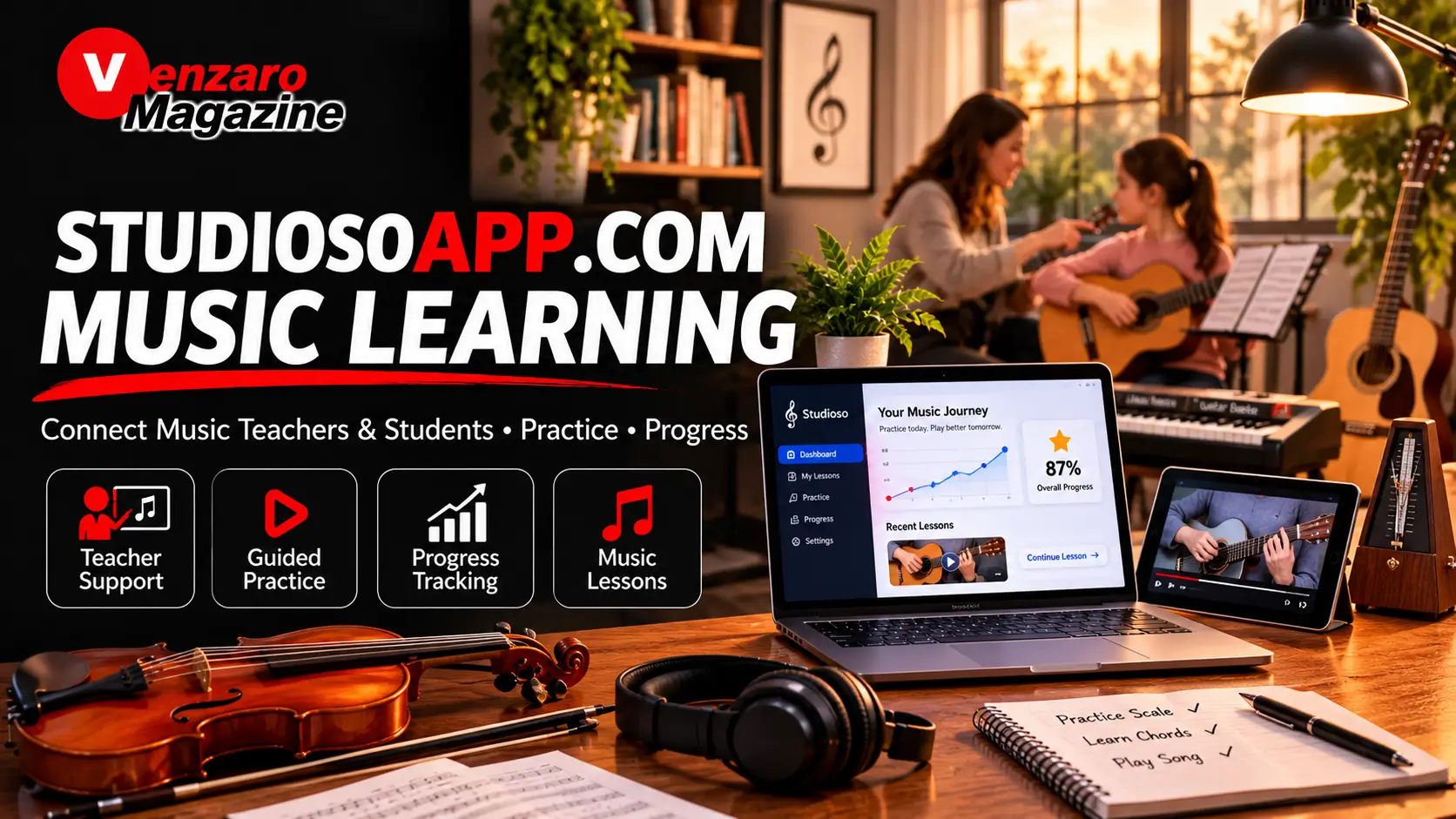




StudiosoApp.com is a website historically associated with Studioso, a music education application designed to connect music teachers with their students and make independent practice more organized. The original platform focused on an important challenge in music education: helping students continue learning between scheduled lessons. Instead of relying entirely on handwritten notes or remembering verbal instructions, students could use the application to follow practice objectives, record their progress, and share assignments with their teachers.
The concept was developed around improving communication between music instructors and learners. Teachers could provide guidance outside regular lessons, while students could use digital tools to organize their practice sessions and demonstrate their progress. This approach made Studioso different from general educational websites because its primary purpose was to support practical music learning rather than provide traditional academic courses.
However, there is an important detail for people researching StudiosoApp.com today. Historical records establish that the original music education application existed, but its current operational status is uncertain. There is also a newer application called Studioso AI that focuses on academic study assistance. These products should not be confused because their documented purposes and developer information are different.
What Is StudiosoApp.com?
StudiosoApp.com was associated with Studioso, a mobile education platform developed to improve the relationship between music teachers and students.
The original application aimed to make music practice more structured by allowing instructors to assign objectives, communicate instructions, and monitor student progress. Students could use the platform to understand what they needed to practise and maintain a record of their learning activities.
The idea addressed a common problem in private music education. A typical lesson may last less than an hour, meaning students spend most of their learning time practising independently. Without clear instructions and regular feedback, it can become difficult for learners to maintain consistency.
Studioso attempted to bridge this gap by providing digital tools that connected classroom instruction with practice at home. Its historical identity was therefore closely associated with music education, teacher-student communication, and progress management.
How Did the Studioso App Work?
The original Studioso platform was designed around two connected experiences: one for teachers and another for students.
Teachers could organize practice assignments and provide instructions, while students could access those tasks and work through them between lessons. This arrangement helped maintain continuity in the learning process.
For example, a piano teacher could assign a particular exercise, explain which sections required attention, and ask the student to practise before the next lesson. The student could then follow the instructions and submit relevant practice work.
This system was intended to make communication more consistent and give teachers better visibility into the student’s progress.
Rather than replacing traditional instruction, Studioso aimed to make the time between lessons more productive.
Main Features of the Original Studioso App
Historical application descriptions identify several features that formed part of the original Studioso experience.
1. Guided Music Practice
Guided practice was one of the central ideas behind Studioso. Students could follow instructions and objectives provided by their teachers instead of depending entirely on memory.
This approach helped learners understand what they needed to work on between scheduled lessons. Clear practice goals can also make it easier to divide complicated musical pieces into manageable sections.
2. Practice Timer and Progress Tracking
The original student application included practice-related tracking tools. A practice timer helped students organize their sessions, while progress-tracking features provided a way to monitor their activities.
These tools were intended to encourage consistency and help learners develop regular practice habits.
However, recording practice time is not the same as measuring musical improvement. The quality of practice, accuracy, technique, and teacher feedback remain important parts of learning an instrument.
3. Teacher-Student Communication
Studioso was designed to help teachers and students share instructions and maintain communication outside traditional lessons.
This feature could make it easier for students to remember assignments and ask for clarification about their practice work.
For instructors, having a centralized communication process could help organize multiple students and maintain a more structured teaching routine.
4. Recording Assignments
Historical descriptions also mention recording assignments as part of the platform’s functionality.
Teachers could request recordings from students to evaluate their work and provide feedback. This approach was particularly relevant for music education because instructors could review performances even when students were not physically present.
Recording assignments also gave learners an opportunity to listen to their own performances and recognize areas that needed improvement.
5. Technique Library
The original student application was also associated with a Technique Library.
This feature was intended to provide additional music-learning information that students could consult during independent practice.
Technique resources can be useful for understanding instrumental skills, improving playing habits, and reinforcing concepts introduced during lessons.
The precise current availability of these historical features has not been established.
Who Was Studioso Designed For?
Studioso was primarily developed for music teachers and students who wanted a more organized approach to learning and practising instruments.
Private music instructors could use its teacher-focused tools to assign objectives, communicate instructions, and monitor student activities.
Students could use the application to organize their practice schedules, follow assignments, and share recordings with their instructors.
The concept could also be relevant to music schools and educational organizations managing multiple learners or ensembles.
Its main audience was therefore different from that of general study applications. Rather than helping users summarize textbooks or complete academic homework, Studioso focused on the practical relationship between music instruction and independent practice.
Who Developed Studioso?
Historical business records associate the original application with Studioso LLC, an education technology startup based in Eden Prairie, Minnesota.
The company was listed in the University of Minnesota’s 2018 MN Cup startup competition. Its product was described as a mobile application connecting music students with teachers and helping organize practice and progress tracking.
Another historical company profile identifies July 2017 as the company’s founding period.
These records establish that Studioso was developed as a real education technology project. However, they do not establish its current ownership, management structure, or operating status.
Information about the company’s later business activities is limited, so claims about an acquisition, permanent closure, or change of ownership should not be treated as confirmed.
Is StudiosoApp.com Still Working?
One of the most important questions for people researching the website is whether the original Studioso service remains available.
The original domain could not be accessed during the latest research check. Historical company information and archived application descriptions remain available, but they do not confirm that the website, mobile applications, or customer support services are currently operational.
This distinction matters because an inaccessible website does not automatically mean that a company has permanently closed. Technical problems, hosting changes, and discontinued services are all possible explanations, but none has been independently established in this case.
The current availability of the original teacher and student applications also remains uncertain. Anyone considering downloading an application under the Studioso name should verify its developer, official store listing, and update history before installing it.
Is StudiosoApp.com the Same as Studioso AI?
No confirmed connection between the historical music education platform and the newer Studioso AI application has been established.
The newer Studioso AI product has a different purpose. It focuses on academic study assistance through features such as homework scanning, document summarization, audio transcription, and AI-supported learning.
Its Apple App Store listing identifies LIBERTY GLOBAL DEVELOPMENT LLC as the developer.
By comparison, the historical Studioso associated with StudiosoApp.com was connected to Studioso LLC and focused on music teachers, students, practice assignments, and performance progress.
The shared name can create confusion in search results, but similar branding does not prove that two applications have the same ownership or development history.
Anyone looking for the original music practice platform should check these differences carefully before downloading a similarly named application.
Benefits and Limitations of the Studioso Concept
The original Studioso concept addressed a practical need in music education by helping students remain connected with their instructors between lessons.
Its proposed approach offered several advantages, including organized practice assignments, clearer learning objectives, progress monitoring, and opportunities to submit recorded performances.
These features could help students become more accountable for their independent practice while giving teachers additional insight into their development.
However, digital tools cannot replace the direct instruction and personalized feedback provided by an experienced music teacher. Tracking practice time does not automatically improve musical ability, and recorded assignments cannot always replace in-person demonstrations or corrections.
The other major limitation today is uncertainty about availability. Historical features should not be mistaken for services that are currently working.
Closing Thoughts
StudiosoApp.com has an interesting history in music education technology. Its original application was designed to connect teachers and students, organize practice assignments, track progress, and make learning outside traditional lessons more structured.
The platform’s central idea addressed a genuine challenge in music education: helping students maintain consistency and receive guidance when their instructors are not physically present.
Although historical company and application records provide useful information about its original purpose, the current availability of StudiosoApp.com remains unconfirmed. The newer Studioso AI application should also be treated as a separate product because its documented purpose and developer are different.
Ultimately, StudiosoApp.com is best understood through its historical role as a music practice and teacher-student communication platform, rather than assuming that its original services are still available today.
Frequently Asked Questions
1. What is StudiosoApp.com?
StudiosoApp.com was historically associated with Studioso, a music education application designed to connect music teachers and students through practice assignments, progress tracking, and communication tools.
2. What features did the original Studioso app offer?
Historical descriptions mention guided music practice, practice timers, progress tracking, recording assignments, teacher-student communication, and a Technique Library.
3. Is StudiosoApp.com still active?
Its current operational status has not been independently confirmed. The original website was inaccessible during the latest research check, although historical records establish that the application previously existed.
4. Who developed the original Studioso application?
Historical records associate the application with Studioso LLC, an education technology startup based in Minnesota. The company was also listed in the University of Minnesota’s 2018 MN Cup competition.
5. Is Studioso AI the same as the original Studioso music app?
No confirmed connection has been established. The original application focused on music education, while the newer Studioso AI application provides academic study assistance and identifies a different developer.
More Read:
Pantagonar: What It Means, Where the Name Appears and What Can Be Verified